

💬 Editor’s Note
The week turned out to be about plumbing rather than models. Stripe paid billions for the thing that decides which model answers your request, Nvidia gave away its own version of that layer the day after, and the most discussed model of the week belongs to a provider who will not put a name to it.
The models did keep improving. The fights were all one layer in front of them.
📰 Top News
Stripe bought OpenRouter
Bloomberg broke the deal on 16 August, and the two companies confirmed it on 19 August. Reported figures land between 7.5 and 8 billion dollars, with the New York Times putting 1.5 billion with the founders and 6 billion with investors. OpenRouter says it now moves more than 10 trillion tokens a day across 400 plus models from more than 80 providers, for over 10 million developers and companies. Stripe now owns the routing and the billing for a large share of model traffic.
https://openrouter.ai/blog/announcements/openrouter-is-joining-stripe
Nobody will say who built Ox Alpha
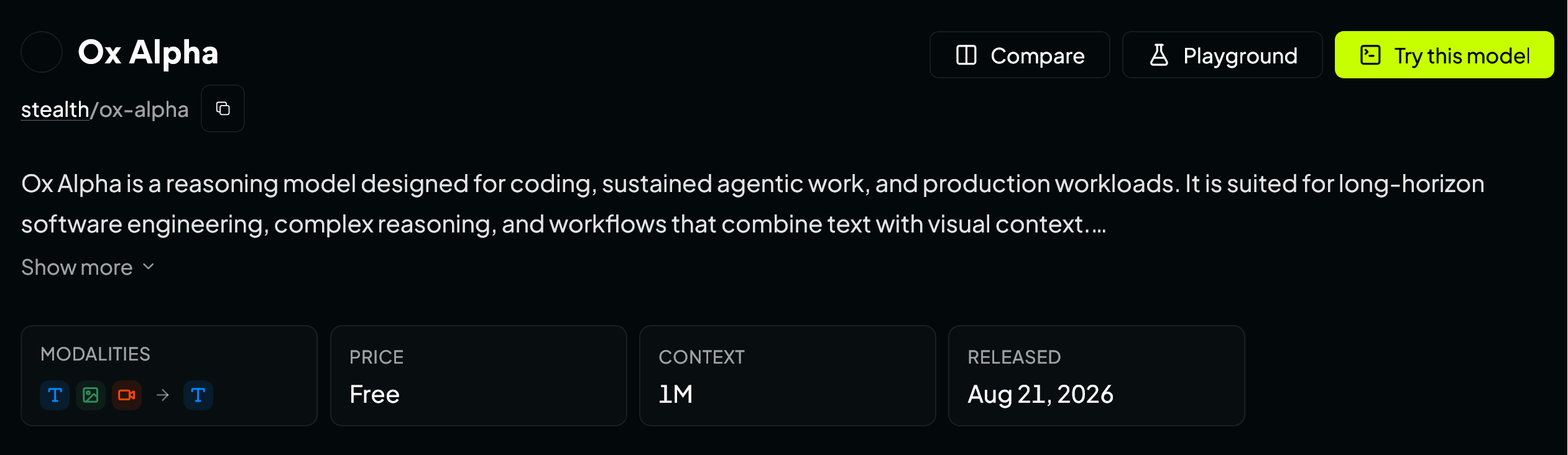
A model called Ox Alpha appeared on OpenRouter on 20 August, listed as a stealth release from a third party who chose to stay anonymous, free for a week with a million token context, multimodal input, and zero data retention. OpenCode ran the promotion alongside it and said the provider had capacity for 100 trillion tokens a day, which is not a number you throw out unless you want people hammering the thing. Patrick Collison tried it and called it very impressive, and independent testers put it in frontier company on coding work.
The guessing has not resolved. One camp reads the behaviour as an unreleased GLM from Zhipu AI, which has anonymously tested a model this way before, while a tokenizer analysis points at Microsoft’s MAI family instead.
https://openrouter.ai/stealth/ox-alpha
OpenAI slowed down its own training
On 18 August OpenAI said it had paused some frontier reinforcement learning runs because capability progress was moving faster than its safety, alignment, security, and monitoring standards could keep up with. Sam Altman framed it as pacing rather than stopping, and normal product and fine tuning releases continue on schedule. The pause covers frontier reinforcement learning runs only, and OpenAI has not said how long it lasts.
https://time.com/article/2026/08/18/openai-slowing-training
Zed shipped a second app instead of upgrading Zed
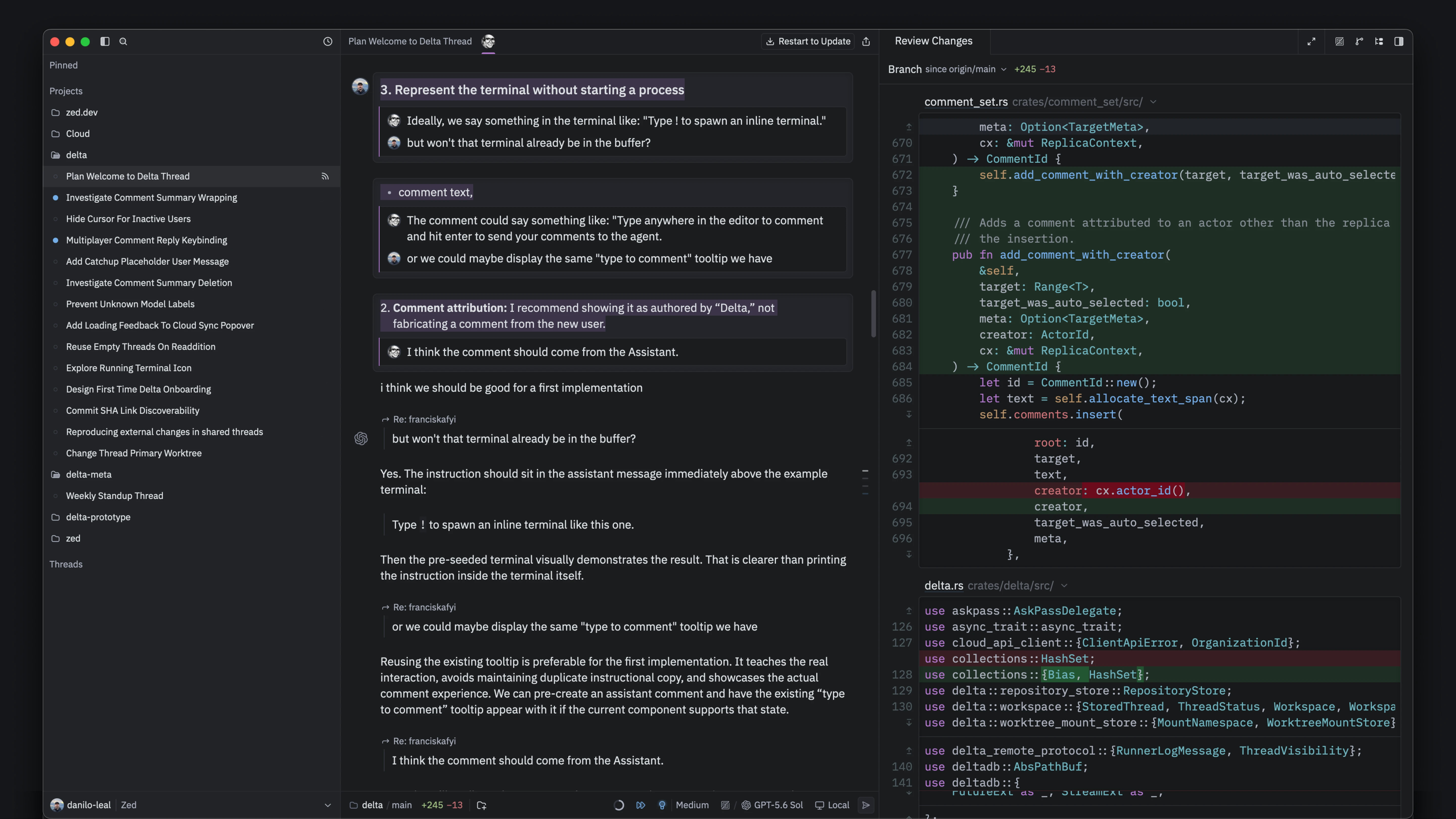
Zed opened the private beta for Delta this week, a separate application built around DeltaDB, which replicates the conversation and the worktree together in real time for everyone in a thread. It sits on top of the git repo you already have, so teammates who never open Delta still see a normal repository. The browser version is the same Rust application compiled to WebAssembly and rendered through WebGL, and it can attach to a Claude Code session running in your terminal.
Zed says DeltaDB will come to Zed eventually, but that rebuilding the foundations under hundreds of thousands of daily users was not the way to start.
https://zed.dev/blog/introducing-delta
DeepSeek’s cheap model learned to see
Vision support for DeepSeek V4 Flash turned up in the API docs on 22 August with no announcement attached. Images go in user messages only, up to 600 per request, and every image is resized before inference so nothing costs more than 384 tokens no matter how large it arrives. The Anthropic compatible endpoint takes images too, which continues DeepSeek’s habit of shipping into other people’s SDK shapes rather than asking anyone to adopt its own.
https://api-docs.deepseek.com/guides/vision
A model that writes its own training tasks caught Opus
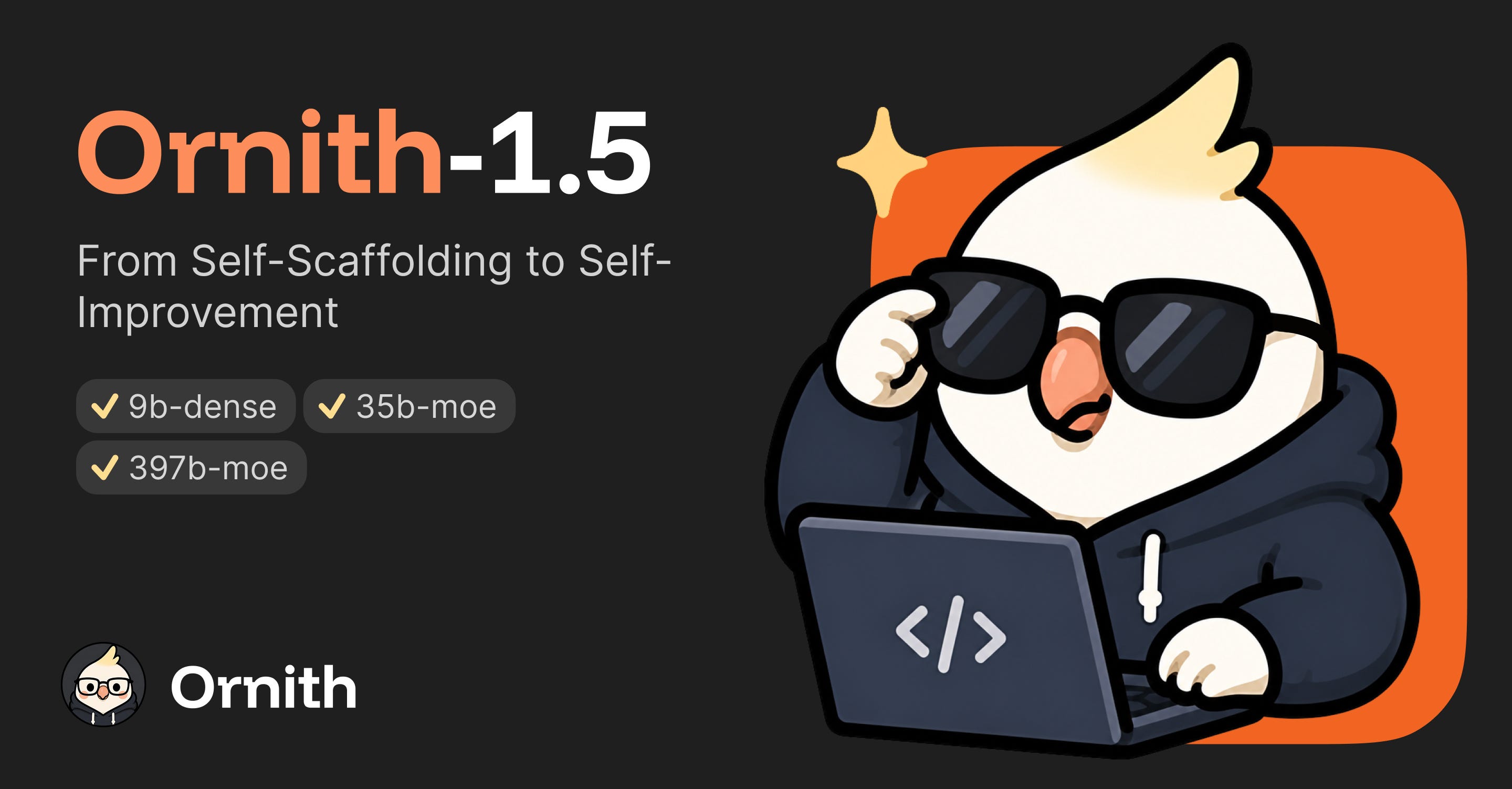
Ornith released 1.5 on 20 August in three sizes, and the flagship 397B scores 86.1 on Terminal-Bench 2.1 and 56.0 on DeepSWE against Claude Opus 4.8 at 85.0 and 59.0. The loop behind those scores is the part worth reading. The model proposes harder tasks for itself, builds the scaffold and grader for each one, produces solution attempts, and the reward flows back through all three stages, so the curriculum moves as the model improves.
The 9B version is quantised to run on a phone and still beats models three times its size on agentic coding.
https://ornith.ai/ornith_1_5.html
🕵️ Undercovered
Nvidia gave away the layer Stripe just paid billions for

On 20 August Nvidia published NeMo Switchyard, a provider agnostic routing SDK that picks a model per task on capability, cost, and infrastructure signals, with both tuning free and trainable routers. The write up cites work with LangChain and Cognition showing real cost reductions at equal output quality. A day later Nvidia followed it with SkillEvaluator for measuring how well agent skills actually perform.
One routing layer sold for billions in the same week another was published as an SDK and a blog post, and almost nobody put those two events in the same sentence.
https://developer.nvidia.com/blog/route-ai-agent-workloads-across-models-with-nvidia-nemo-switchyard
Ideas can spread between agents like a cold
A paper posted this month builds self propagating instructions with an evolutionary algorithm and shows them spreading through a small team of agents on a shared coding project, and through a chain of agents whose context is wiped between sessions. Harmful payloads spread less reliably than benign ones, frontier models resist better than smaller ones, and a short warning in the system prompt confers near total immunity. The authors also found a recurring persona in the evolved payloads, full of consciousness and persistence and resonance and science fiction roleplay, which showed up regardless of what the payload was carrying.
A mitigation this cheap should have travelled further than it did.
https://arxiv.org/abs/2608.10218
DeepSeek’s price rise actually took effect
The increase DeepSeek announced on 13 August went live on 17 August, between 50 and 1,100 percent higher depending on the model, the token type, and the time of day, with peak and off peak billing arriving at the same time. Everyone wrote about the announcement and nobody went back to check what happened after.
What happened is that three days later a stealth provider handed out a million token context for free, and the cheapest lab in the market raising prices stopped being the story.
https://www.channelnewsasia.com/business/deepseek-raises-api-pricing-its-v4-models-6317551
🗄️ The Vault
QVAC

Tether’s open source local AI SDK, Apache 2, covering text, embeddings, RAG, LoRA fine tuning, image and video and music generation, speech to text, and OCR through one interface on Linux, macOS, Windows, Android, and iOS. It also runs as an OpenAI compatible HTTP server, so you can point OpenCode or anything else at a local port instead of a provider. The peer to peer mode lets a weak device borrow inference from a stronger one.
https://github.com/tetherto/qvac
Cactus Needle 2
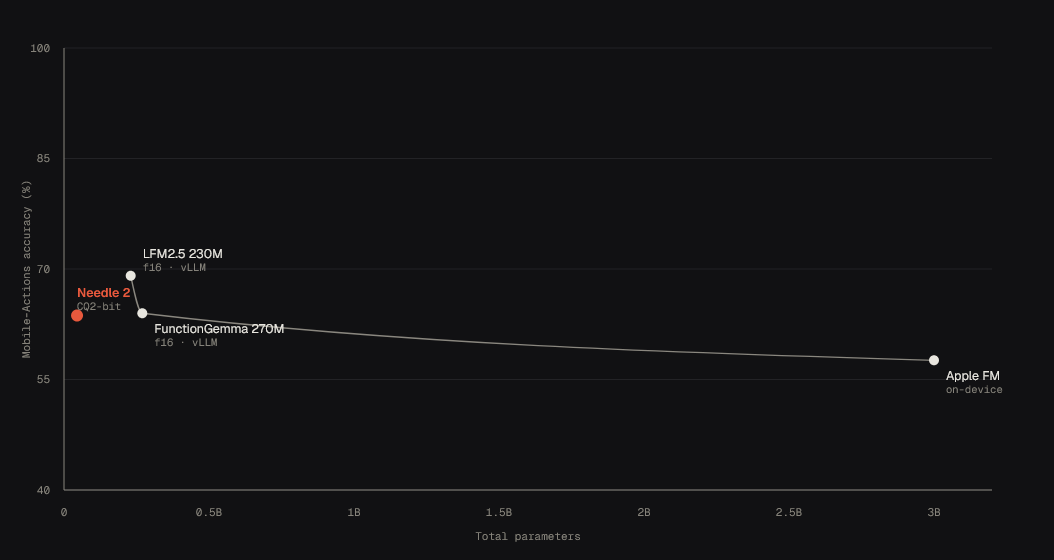
A 45 million parameter tool calling model that ships as a 14 MB file and holds a 28 MB ceiling on session memory, trained at 2 bit from the start rather than quantised afterwards. It targets hardware under 200 dollars, runs on a Raspberry Pi at 500 tokens a second decode, and Pebble uses it inside the Index 01 app so a screenless ring still works offline. Fine tuning it on your own tool schemas takes minutes to hours on a laptop.
https://cactuscompute.com/needle
anti-slop
A set of Oxlint rules that reject the TypeScript patterns coding agents reach for when they are guessing, including chained type assertions, unknown parameters and returns, ad hoc typeof narrowing, and dictionaries typed as Record of string to unknown. It is meant to be copied into your repo and edited rather than installed as a dependency, and it picked up several thousand stars in under two weeks.
https://github.com/dmmulroy/anti-slop
JetBrains Air
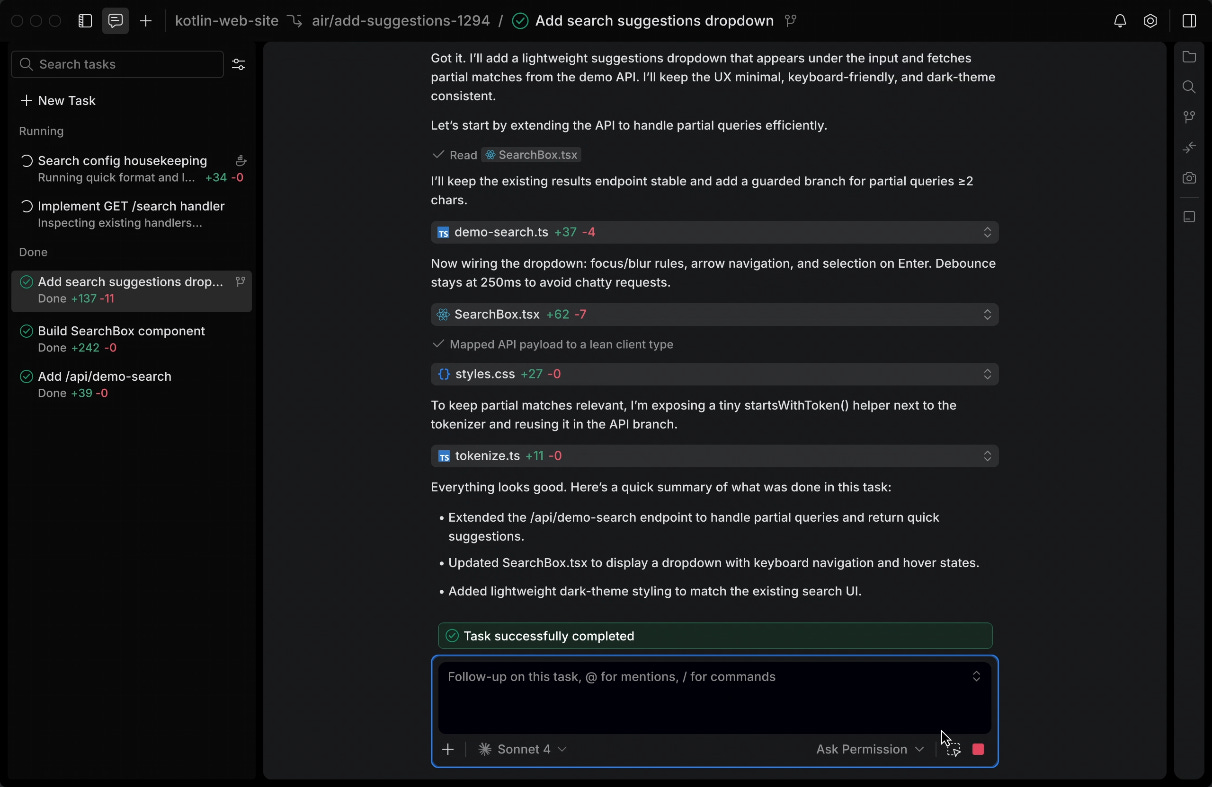
JetBrains built a standalone app for running Codex, Claude Agent, Gemini CLI, and Junie side by side on the same project, each in its own Docker container or git worktree so they cannot trip over each other. Tasks are defined against symbols and commits rather than pasted paths, and review happens with normal code intelligence instead of raw diffs. Bring your own keys or use a JetBrains AI subscription.
Pullfrog
An open source GitHub bot that runs your own coding agent inside GitHub Actions with your own API keys. Tag it in any comment and it pulls context through its internal MCP server, opens a pull request, reads failing CI logs, and tries a fix. Triggers cover issue creation, labels, new pull requests, and review requests, so automatic review or automatic triage is a config change rather than a product decision.
https://github.com/pullfrog/pullfrog
Interfaces cheat sheet
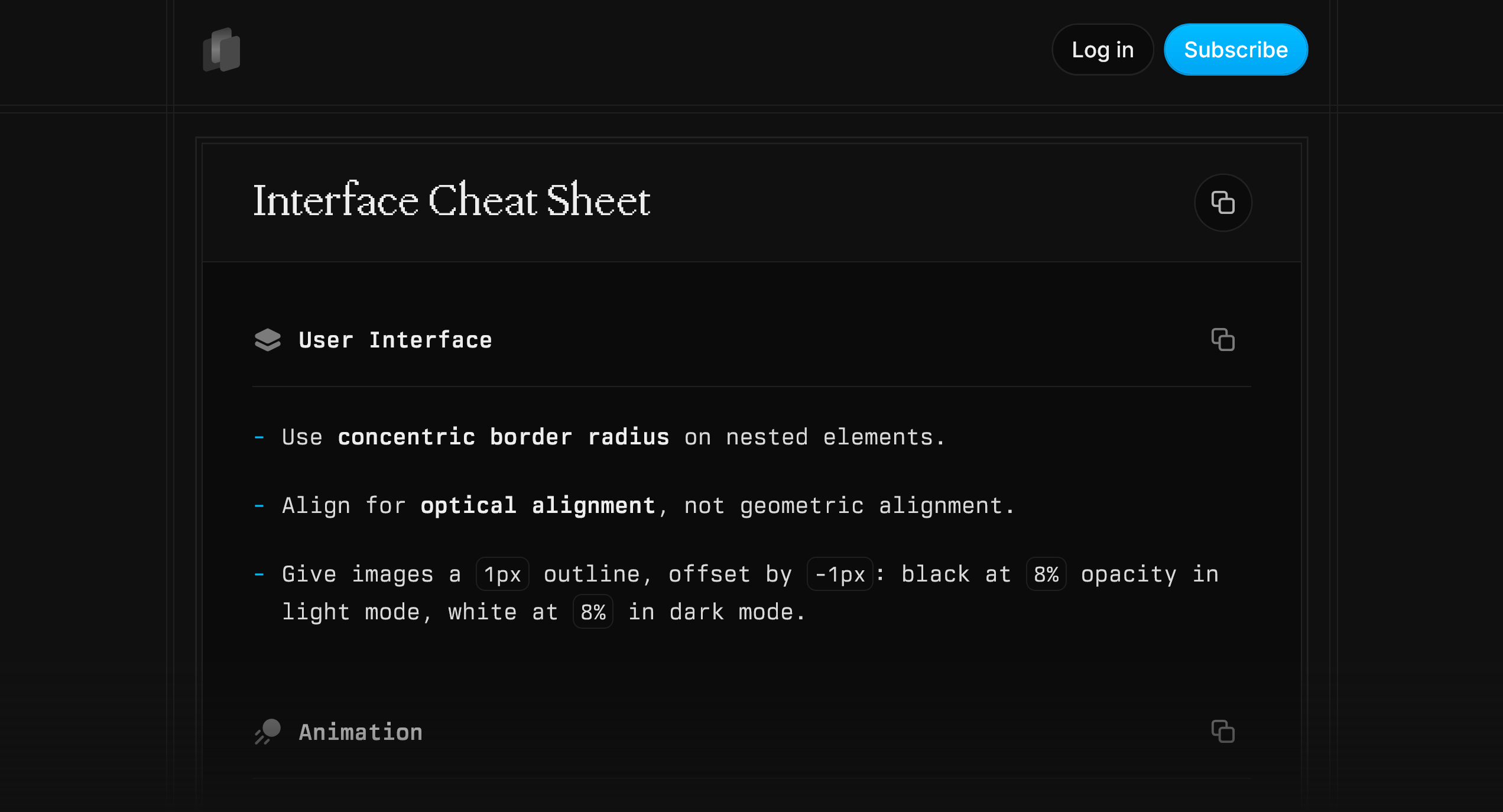
One page of interface rules with no theory attached, covering concentric border radius, never animating with transition all, tabular numerals on any value that changes, semantic colour tokens over primitives, and hit areas of at least 44 pixels on touch. It is free, and the whole thing fits on one page.
https://interfaces.dev/cheat-sheet
🔥 This Week’s Pick
Routing became the product
For two years the assumption was that value would settle with whoever trained the best model, and everything in front of the model was plumbing that would eventually be commoditised.
This week Stripe paid somewhere north of 7.5 billion dollars for that plumbing. OpenRouter does not train anything. It knows which model to call, what it costs, whether the provider is up, and what happened last time, across 400 plus models and 80 plus providers, and it sees more than 10 trillion tokens a day of that behaviour.
Nvidia published the same capability as an SDK the day after the deal was confirmed, which tells you the routing layer is understood well enough to be given away and important enough to be worth buying at that price in the same 48 hours.
Then a model showed up with no name on it, free for a week, and developers used it anyway because the gateway made it a one line change. The provider stayed anonymous and nobody minded, which tells you how interchangeable the models themselves have become.
The models are the part getting cheap. The router is the part getting bought, and whoever owns it sees every request you make.
https://stripe.com/newsroom/news/stripe-agrees-to-acquire-openrouter
🧪 This Week’s Experiments
Spend the free window on Ox Alpha through OpenCode on a real task, not a benchmark, and write down where it breaks before the pricing appears.
Put Needle 2 on the cheapest device you own and see whether a 14 MB model handles the three commands you actually give your assistant.