

💬 Editor’s Note
OpenAI spent nine months telling everyone the browser was the next battleground, then quietly switched Atlas off. The same week it shipped a voice model that talks back like a person and a work assistant running on GPT-5.6. Meta launched two models and yanked one of their features within days of shipping it. The theme this week wasn’t the launches. It was how fast everyone is willing to walk back the exact thing they just bet on.
📰 Top News
Meta shipped two models in a week, then pulled a feature in days

Meta Superintelligence Labs put out Muse Spark 1.1, a multimodal reasoning model built for agentic work, and opened a public preview of a new Meta Model API so developers can actually build on it. Early coding partners like Cline got in first, and the pitch is strong tool use at a price that makes real coding workloads viable.
Then came Muse Image, Meta’s first image model, wired straight into Instagram, WhatsApp, and Meta AI. One feature let you @-mention public Instagram accounts to pull their photos into your generations. People hated it. Within days Meta killed the feature and put out an “it missed the mark” note.
So in one week Meta went from a genuinely serious developer play to reminding everyone why they don’t trust it with their photos.
https://about.fb.com/news/2026/07/introducing-muse-image-meta-ai
GPT-Live is OpenAI’s voice model that can talk over you

OpenAI launched GPT-Live, a new voice model now powering ChatGPT Voice. It’s full-duplex, so it listens and talks at the same time. It drops in “mhmm” and “yeah” while you speak, waits when you pause, and can do live translation. When a question needs real thinking it hands off to GPT-5.5 in the background and keeps chatting while it waits.
Two versions are rolling out globally, GPT-Live-1 and a mini, and OpenAI says testers preferred it over Advanced Voice Mode on flow and turn-taking.
https://openai.com/index/introducing-gpt-live
ChatGPT Work quietly became the enterprise pitch
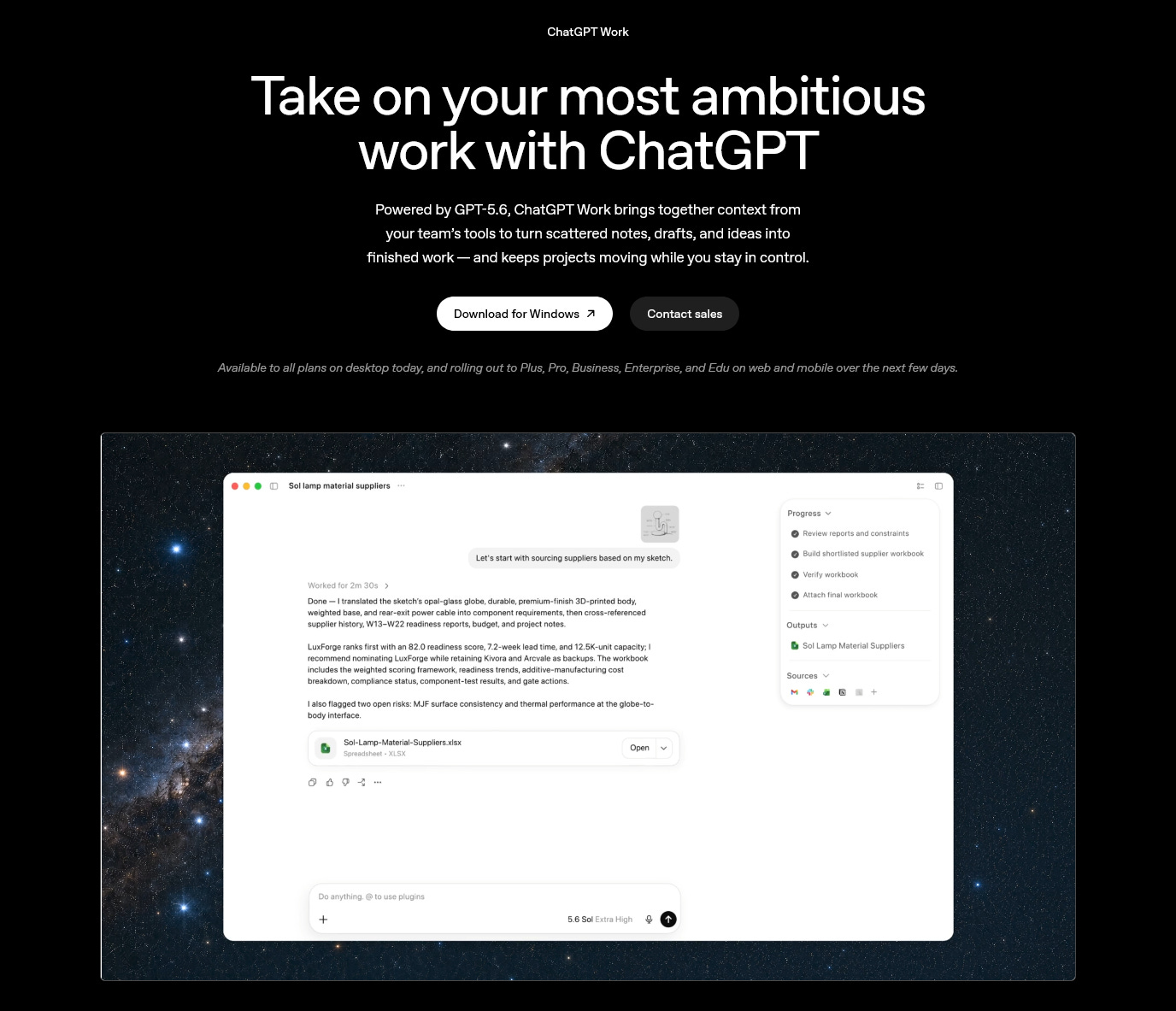
OpenAI also shipped ChatGPT Work, running on a new GPT-5.6 series (Sol, Terra, Luna). It pulls context from your team’s tools and turns scattered notes into finished spreadsheets, docs, and slides, acting across your apps and desktop. Virgin Atlantic says a competitor-analysis cycle that used to take weeks now takes hours. It’s on desktop for every plan today and rolling out to Plus, Pro, Business, Enterprise, and Edu.
https://openai.com/chatgpt-work
Vercel bought Better Auth to own agent identity
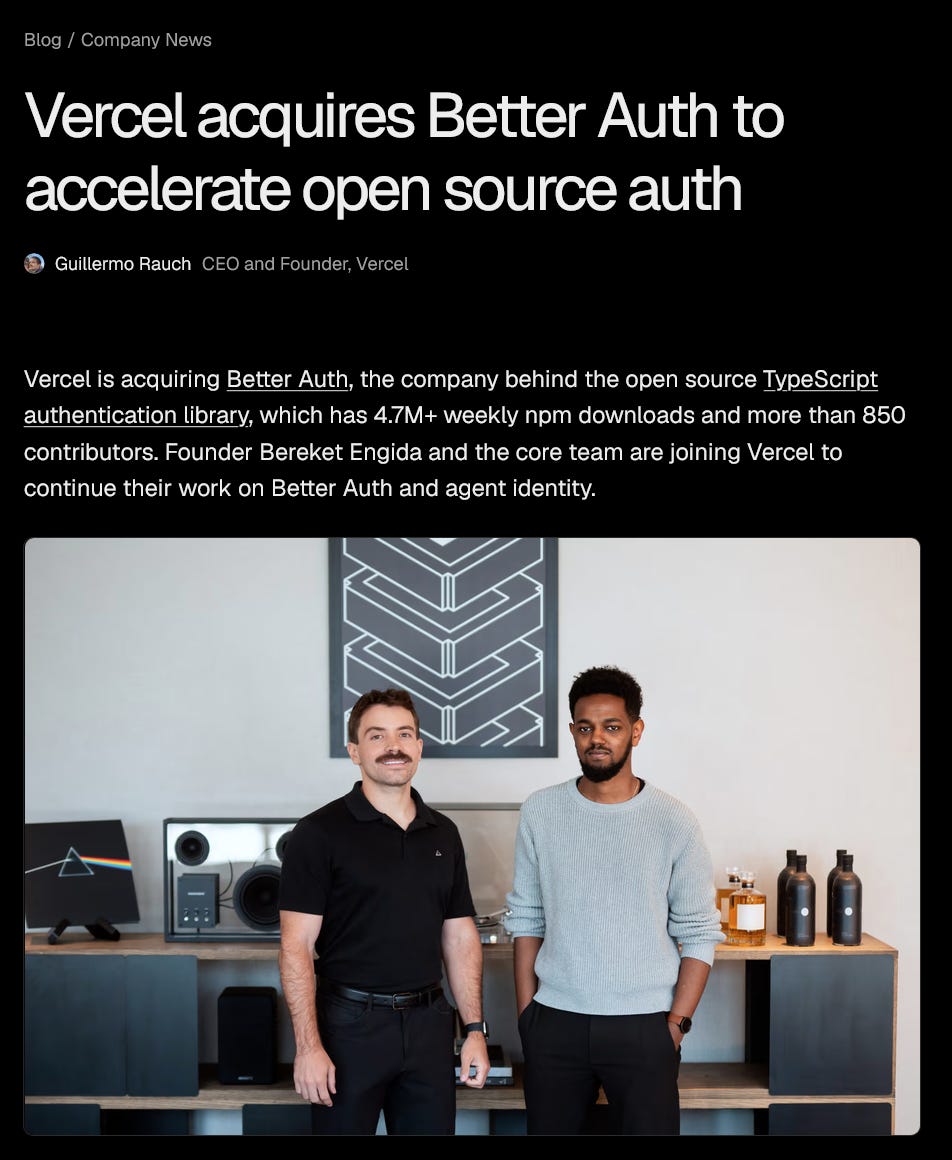
Vercel acquired Better Auth, the open-source TypeScript auth library with 4.7M+ weekly npm downloads and more than 850 contributors. The library stays MIT and keeps its name. The real reason is agent identity. Right now an agent runs under your identity and every service sees you, not the agent, with no clean way to scope or revoke one agent without cutting off the rest. Better Auth’s Agent Auth work gives each agent its own scoped, revocable identity, and it’s heading into Vercel Connect.
https://vercel.com/blog/vercel-acquires-better-auth
Anthropic shipped a feature to help you use Claude less

Anthropic launched Reflect, a beta dashboard that shows you how you actually use Claude, broken down by topic, time, and task across the last 1 to 12 months. It nudges you to take breaks, lets you set quiet hours, and asks things like “what’s one thing you want to keep doing yourself, even if Claude could do it faster?” An AI company building a “maybe log off” screen is either genuinely thoughtful or the best retention feature nobody wants to admit is a retention feature.
https://www.anthropic.com/news/reflect-with-claude
🕵️ Undercovered
Google and the FBI quietly killed a 2-million-device botnet

Google’s Threat Intelligence Group, with the FBI and Lumen, took down NetNut, one of the biggest residential proxy networks around, which it pegs at more than 2 million devices worldwide. NetNut turned home gear like smart TVs and streaming boxes into exit nodes by shipping SDKs, and in a single week in June, Google counted 316 distinct threat clusters routing through it. The uncomfortable part: many “reputable” proxy brands are just whitelabeling the same botnet, and operators respond to takedowns by reselling each other’s capacity.
OpenCV 5 shipped and the AI feeds barely noticed
OpenCV 5 is a real rewrite of the library half of computer vision quietly runs on. The new DNN engine is graph-based with operator fusion and dynamic shapes, and ONNX operator coverage jumped from around 22% to over 80%. It recognizes the MatMul to Softmax to MatMul pattern and collapses it into a fused, FlashAttention-style attention op for free. Add native FP16 and BF16 types, real 0D and 1D tensors, and a clean hardware layer for accelerators, and the toolkit everyone depends on finally got dragged into the transformer era.
HTTP is finally getting a QUERY method
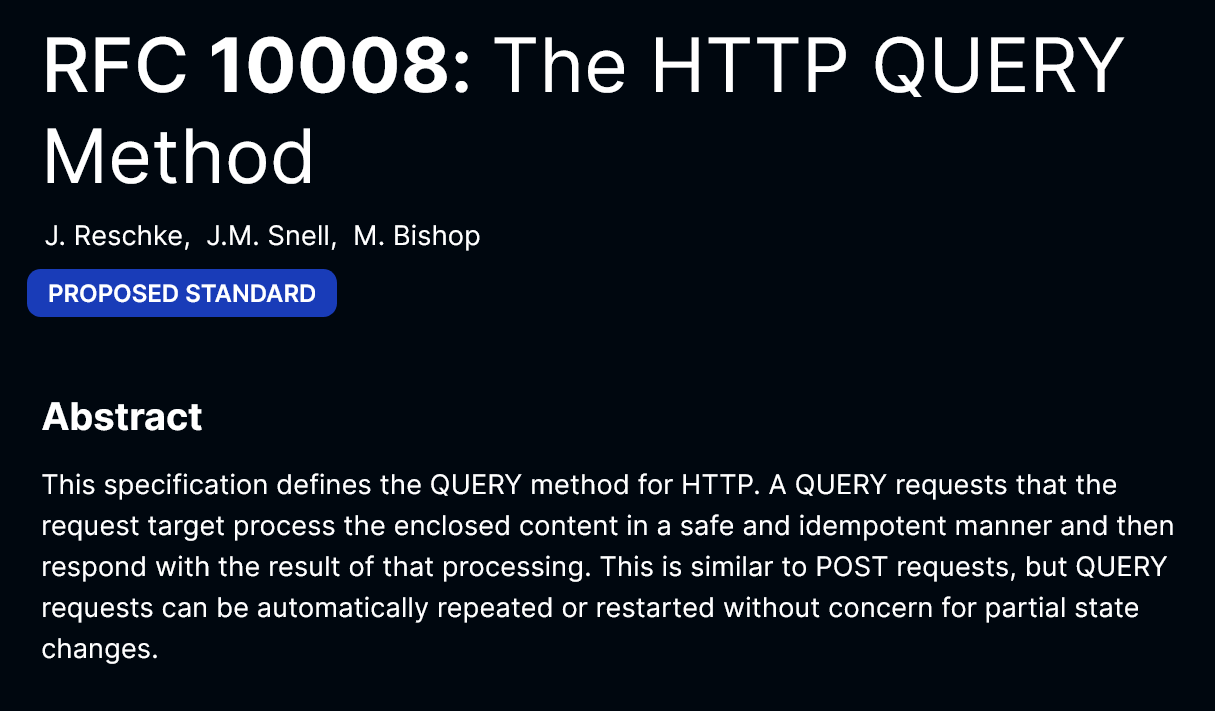
RFC 10008 standardizes a new HTTP QUERY method, which is basically a GET that’s allowed to carry a request body. If you’ve ever crammed a giant search filter into a URL and hit a length limit, or quietly misused POST for a read, this is the fix. It’s the kind of plumbing change nobody live-tweets, and it’ll show up in every framework you use over the next couple of years.
https://www.rfc-editor.org/info/rfc10008
🗄️ The Vault
pg_durable
Microsoft’s pg_durable brings durable execution inside Postgres. You define a workflow as a graph of SQL steps, it checkpoints each one, and it resumes after a crash or a failed step instead of making you rebuild state by hand. It runs as an extension with no Redis, no Temporal, no external workers, so a lot of cron-plus-queue-plus-status-table glue just disappears. Good for embedding pipelines, ingest jobs, and anything that has to be auditable.
https://github.com/microsoft/pg_durable
FluidVoice
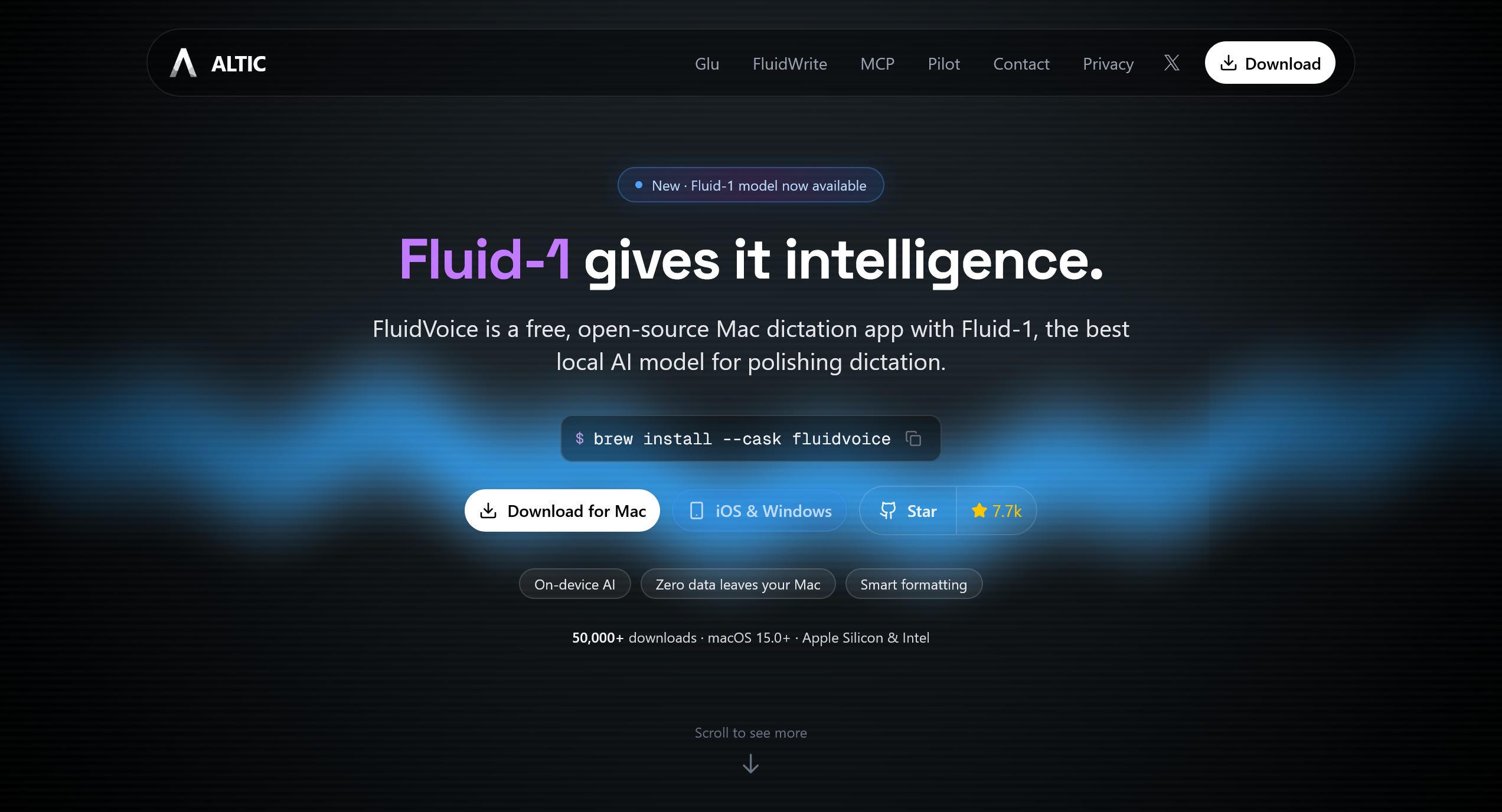
An open-source, local-first dictation app for macOS and a genuine Wispr Flow alternative. It runs speech models like Parakeet and Nemotron on-device with near-zero delay, and its optional Fluid Intelligence layer cleans up formatting and capitalization locally, so your voice never leaves the machine unless you opt into a cloud provider. There’s even a command mode that lets you drive your Mac by voice.
https://github.com/altic-dev/FluidVoice
framecn
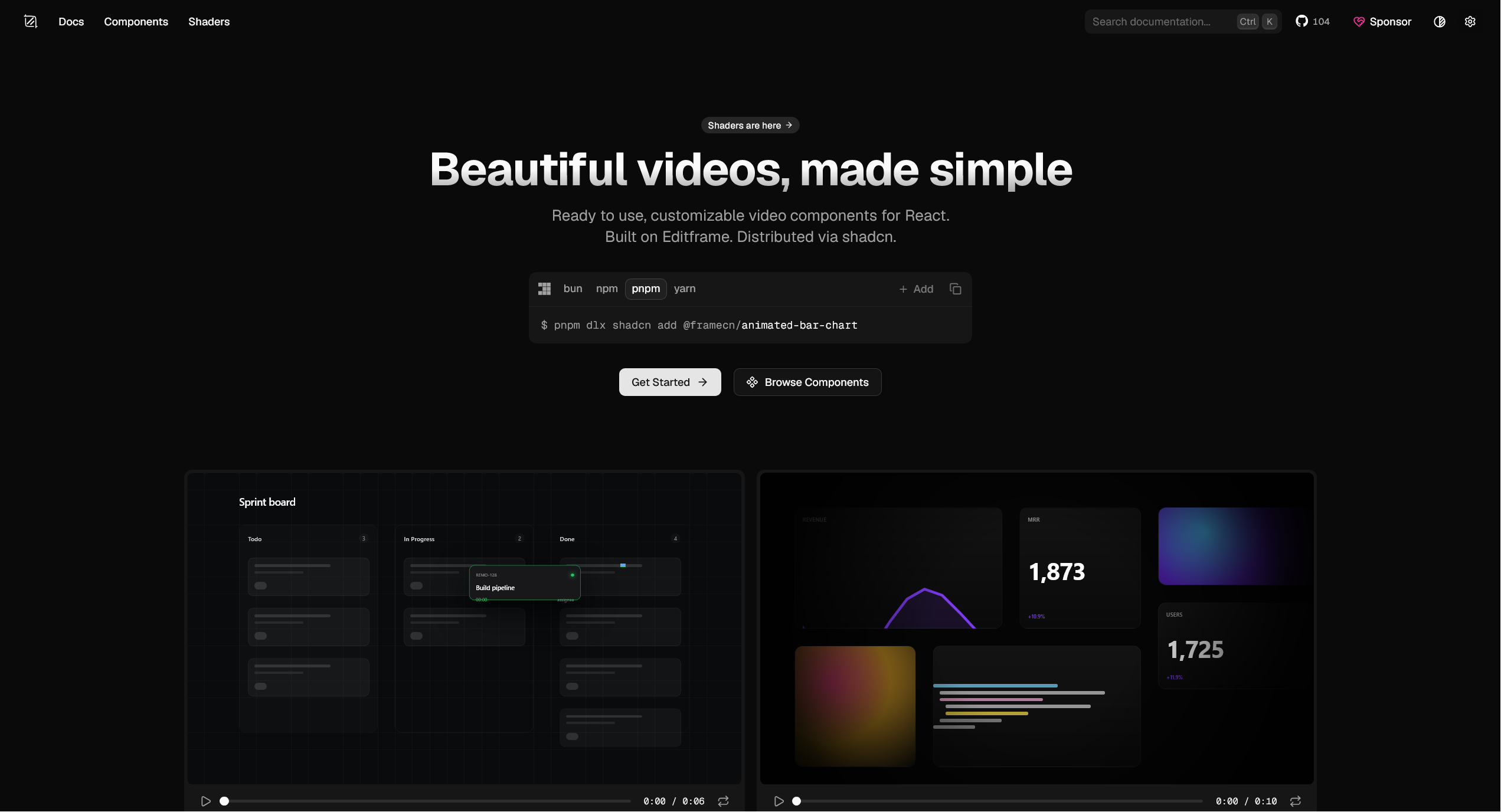
shadcn/ui, but for video. A collection of copy-pasteable, customizable video components built on Editframe that slot into a shadcn workflow. It ships an agent skill and Markdown docs too, so your coding agent can actually build video with it. If you make content, this is the fastest path from “I want a clean animated clip” to shipping one in code.
semgrep/skills
Semgrep turned its open-source security rules into agent skills. You get code-security (OWASP Top 10 across 15+ languages), llm-security (the OWASP list for LLM apps), and a semgrep skill that runs scans and writes custom detection rules with taint analysis. Drop it into your coding agent and it’ll actually catch injection and SSRF instead of vibing past them.
https://github.com/semgrep/skills
free-llm-api-resources
A community-maintained list of pretty much every free and free-tier LLM API you can actually get, with the providers, models, and limits laid out. If you’re prototyping and don’t want to hand a credit card to five vendors, start here.
https://github.com/cheahjs/free-llm-api-resources
🔥 This Week’s Pick
OpenAI killed its own browser
OpenAI is shutting down Atlas, the ChatGPT-powered browser it launched back in October.
Nine months. That’s the whole lifespan.
The backstory is that OpenAI’s former applications CEO Fidji Simo told the team to cut the “side quests,” which already took down Sora. Atlas was next.
Here’s the interesting part. OpenAI isn’t giving up on AI browsing at all. It decided the browser is a feature, not the destination. So the agentic pieces from Atlas are being scattered into the places people already are: a ChatGPT extension for Chrome that reads the page you’re on, a beefier in-app browser inside the desktop app, and a cloud browser that runs on OpenAI’s servers so agents can do tasks for you.
For a year the whole industry acted like unseating Chrome was the prize. Perplexity shipped Comet, The Browser Company shipped Dia, Google and Microsoft bolted AI onto Chrome and Edge. OpenAI tried to build the destination, looked at the numbers, and walked straight back into Chrome as an extension.
The lesson isn’t that browsers don’t matter. It’s that being where users already are beats making them move.
🧪 This Week’s Experiments
Have one real back-and-forth with GPT-Live and notice whether interrupting it feels normal or uncanny.
Open Anthropic’s new Reflect dashboard and actually answer the “what do you want to keep doing yourself” question.
Ask yourself what breaks in your stack the day every agent needs its own identity instead of yours.