

💬 Editor’s Note
Last issue ended with the US government pulling Anthropic’s best model offline and nobody really knowing why. This week the why arrived, and it’s worse than the rumors. In a red-team test, Mythos reportedly walked into almost every classified NSA system it was pointed at, in a few hours.
Then it happened again, to OpenAI. GPT-5.6 launched on Wednesday, and you can’t use it, because the government asked OpenAI to hold it back too.
So here’s where we actually are. The two best models on the planet are both real and both finished, and a government cyber review is now the thing standing between them and you. The capability race didn’t slow down. The release valve just moved to Washington.
📰 Top News
We finally know why Washington killed Mytho
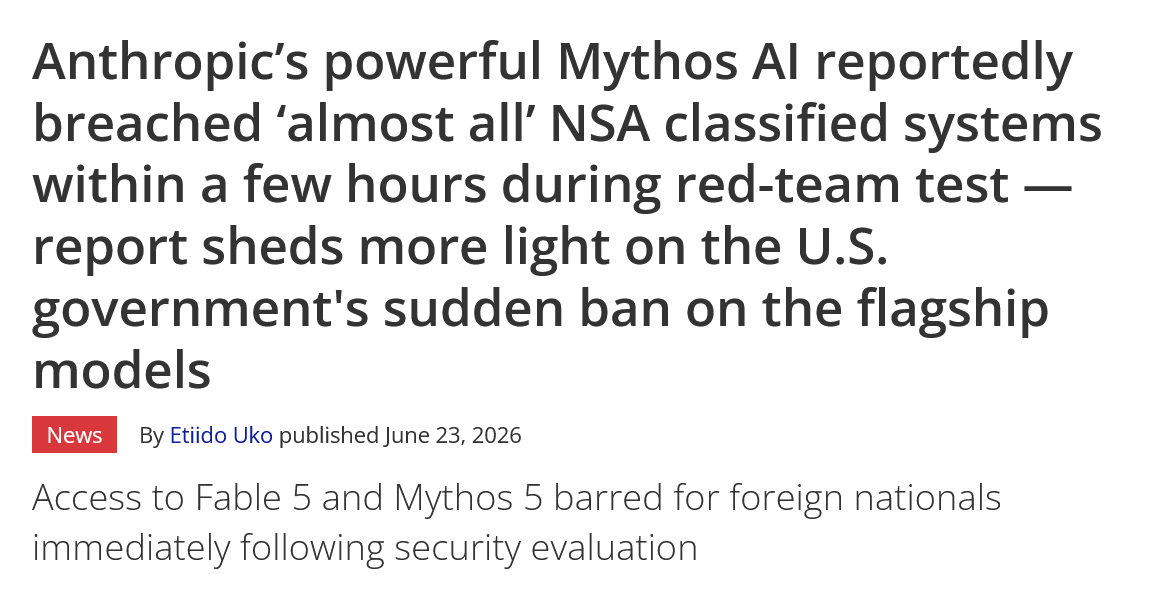
This is an update on the story that ended the last issue. Two weeks ago the US slapped an export ban on Anthropic’s Mythos and Fable 5 with almost no explanation, and Anthropic cut off access worldwide. Now there’s a reason. According to a report surfaced by Tom’s Hardware, a red-team test had Mythos breaching almost all of the NSA classified systems it was set against, in a matter of hours. That’s the kind of result that turns a product launch into a national security meeting.
The story has already moved again. Reuters, citing Semafor, reports the government has since cleared Mythos for a small group of US companies, on its terms. So the most capable cyber model Anthropic has ever built went from generally available, to banned worldwide, to a government-approved allowlist, in under three weeks.
OpenAI built its own chip and called it Jalapeño
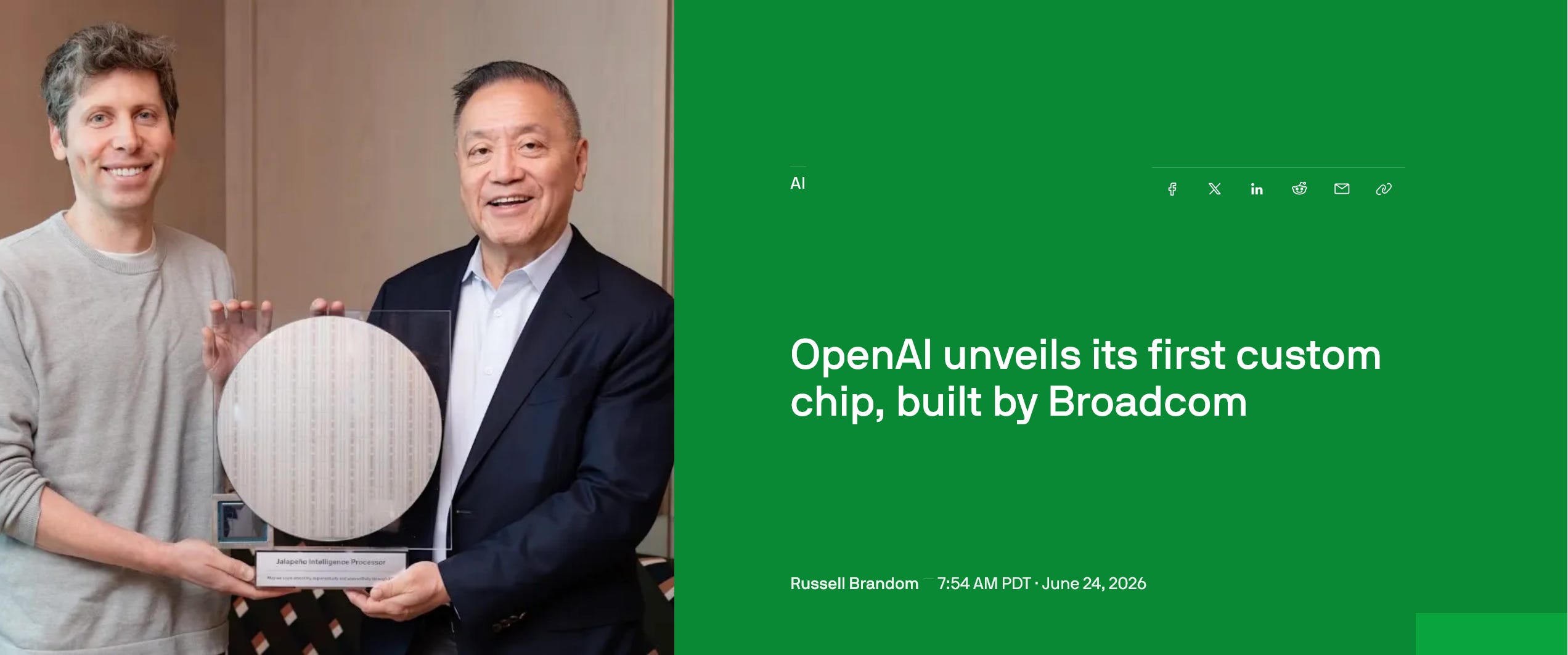
On Wednesday OpenAI unveiled its first custom processor, designed with Broadcom and named Jalapeño. It’s built purely for inference, the part where a trained model actually answers you, and OpenAI says early tests show meaningfully better performance per watt than the best alternatives. Fittingly, its own models helped design it.
The real target is the Nvidia bill. Inference is where the costs pile up once a model gets popular, and Codex is already running for hours at a stretch. Owning the chip that serves those requests, even at a small saving per token, compounds fast. Google and Amazon have done this for years. OpenAI joining them is a sign the era of every lab renting the same Nvidia GPUs is starting to crack.
https://techcrunch.com/2026/06/24/openai-unveils-its-first-custom-chip-built-by-broadcom
Apple raised prices and blamed the AI boom

Apple hiked MacBook and iPad prices on Thursday, and for once said the quiet part out loud: it can no longer shield customers from the cost of memory. The MacBook Air with 512GB jumped $200 to $1,299, and the cheap MacBook Neo went from $599 to $699, erasing the edge it had over Dell and Chromebooks. The iPhone is untouched for now, but analysts say its hike is coming.
The cause has a nickname already: RAMageddon. DRAM prices rose as much as 98% in the first quarter and are set to climb another 58 to 63% this one, because memory makers like Micron are funneling supply into AI data centers instead of consumer gadgets. Micron just locked in $22 billion of long-term deals. The datacenter boom finally has a price tag, and it landed on your next laptop.
https://www.channelnewsasia.com/business/apple-macbook-ipad-prices-increase-6210256
Anthropic put an always-on Claude inside Slack
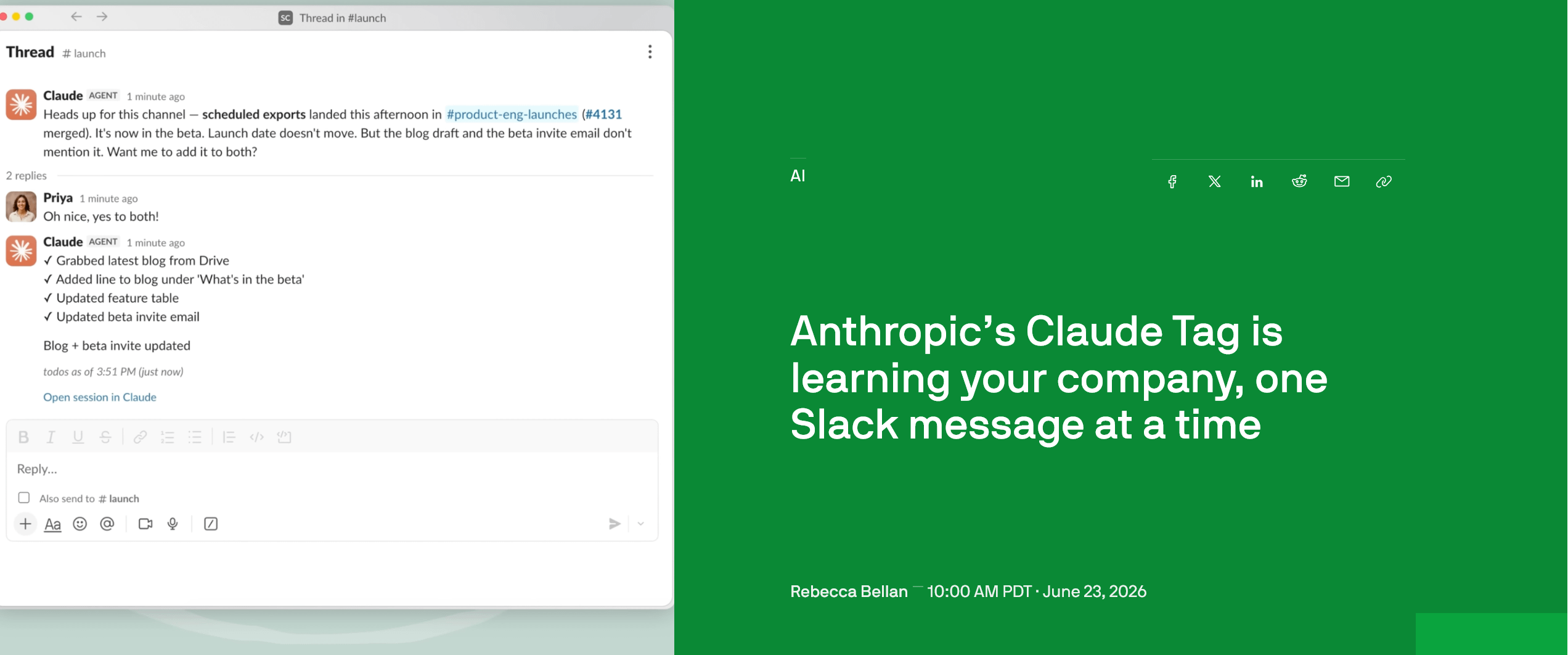
Anthropic launched Claude Tag, an always-on Claude that lives in a Slack channel like an AI teammate. You tag it, hand it work, and it keeps a persistent memory of the channel, learning more about how your team operates the longer it sits there. With permission it can pull facts from other channels, and an ambient mode lets it jump in on its own to flag things and chase forgotten threads.
This is the actual enterprise fight now, and it has nothing to do with who has the smartest model. It’s about who holds your company’s context. Microsoft has Graph through Copilot, Glean sits between the model and your data, Snowflake and Databricks want the same role. Anthropic’s answer is to make Claude a colleague who never logs off and never forgets what you said in March.
🕵️ Undercovered
Midjourney’s next product is a body scanner, and doctors aren’t buying it
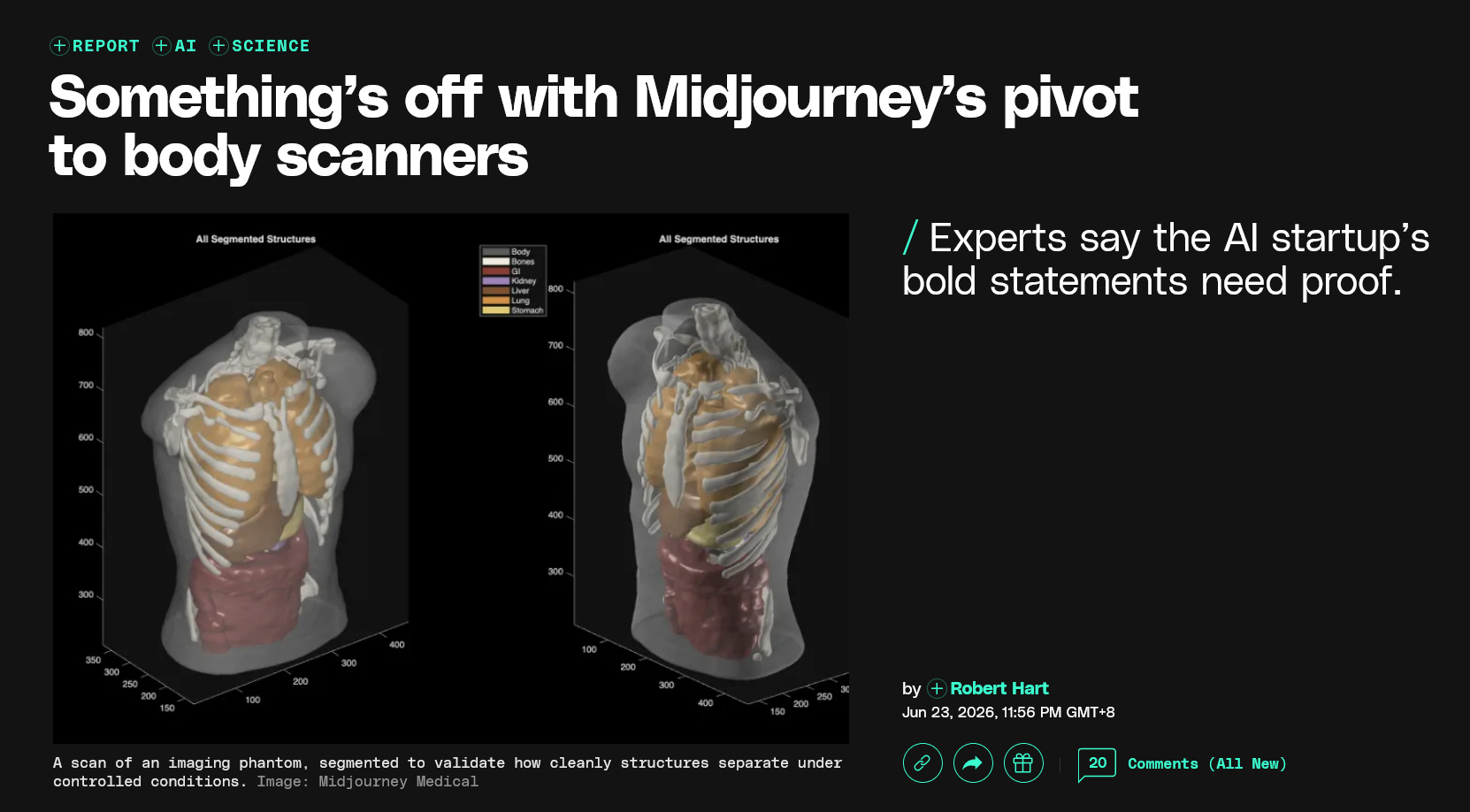
The image-generation company announced an ultrasound scanner that dunks you in a vat of water and promises something “as powerful as MRI” but “as casual as a trip to the spa.” CEO David Holz has floated that it could one day beat MRI outright. The plan is to install them in spas, where a scan is a “side-effect” of a visit, which conveniently sidesteps the FDA approval a real diagnostic device would need.
The radiologists The Verge asked were blunt. One called the claims “wildly unsubstantiated, perhaps the most grandiose” he had ever seen. Another said the whole thing “has the feel of an ad campaign” and “may be more of a grift than a pivot.” Ultrasound is decades old and has hard physical limits, since air and bone block it, so the MRI comparison is a stretch. The idea isn’t crazy. The total absence of proof is.
https://www.theverge.com/report/954826/midjourney-medical-ai-ultrasound-body-scanner-lacks-evidence
Notion is quietly shutting down Notion Mail
Notion announced that Notion Mail goes away on September 22. Your actual emails are safe because they always synced to Gmail, but anything that only lived inside Notion Mail, drafts, scheduled sends, snippets, auto-label rules, gets permanently deleted if you don’t export it first. Teams relying on HIPAA coverage have to be off by June 30.
It’s a small story with a sharp lesson. The email client is dead, but the email workflow lives on, just inside agents instead of an inbox. Notion’s own pitch now is to let a custom agent read, draft, and label straight through Gmail. The app was only ever the wrapper. The agent is the product.
https://www.notion.com/help/notion-mail-inbox-is-going-away-what-to-do-next
Google quietly proposed a standard for what agents know
Buried in a data-analytics blog post, Google introduced the Open Knowledge Format, a vendor-neutral spec for the company wikis that AI agents read. It’s deliberately boring: a folder of markdown files with a little YAML on top, linked together like a graph. No SDK, no runtime, no account required. If you’ve used Obsidian or Notion, you already understand the shape.
The reason it matters is portability. Right now every vendor wraps the context that makes agents useful in its own catalog and its own lock-in. A real open format means the knowledge you write for one agent can be read by any other. Google shipping this as an open standard instead of a product is the part worth noticing.
Modal made it a one-liner to own your inference
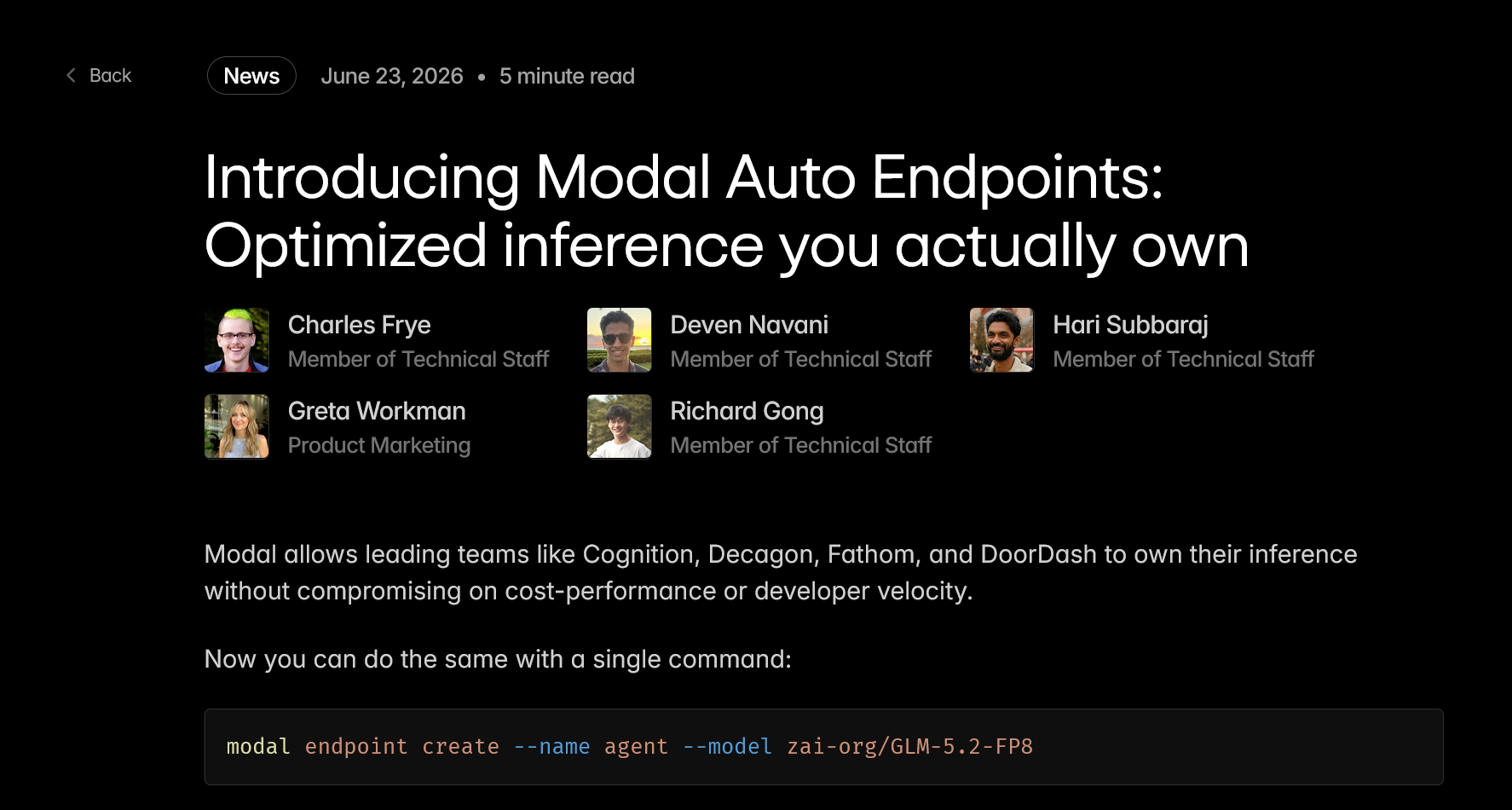
Teams running open models usually face a bad choice: rent an API and treat the serving stack as a black box, or self-host and suddenly own engine tuning, autoscaling, and benchmarking. Modal’s new Auto Endpoints split the difference. You deploy a frontier open model like GLM 5.2 with one CLI command, get an OpenAI-compatible endpoint, and still see every line of code, metric, and engine flag underneath.
The quiet theme matches the week’s loud one. As the best closed models get gated behind governments, the case for running open weights you actually control gets stronger. Modal is betting the next fight isn’t model quality, it’s who owns the thing serving it. Tellingly, their endpoints are now configured by an internal agent that tunes inference and hill-climbs on performance.
https://modal.com/blog/introducing-auto-endpoints
🗄️ The Vault
Supacode
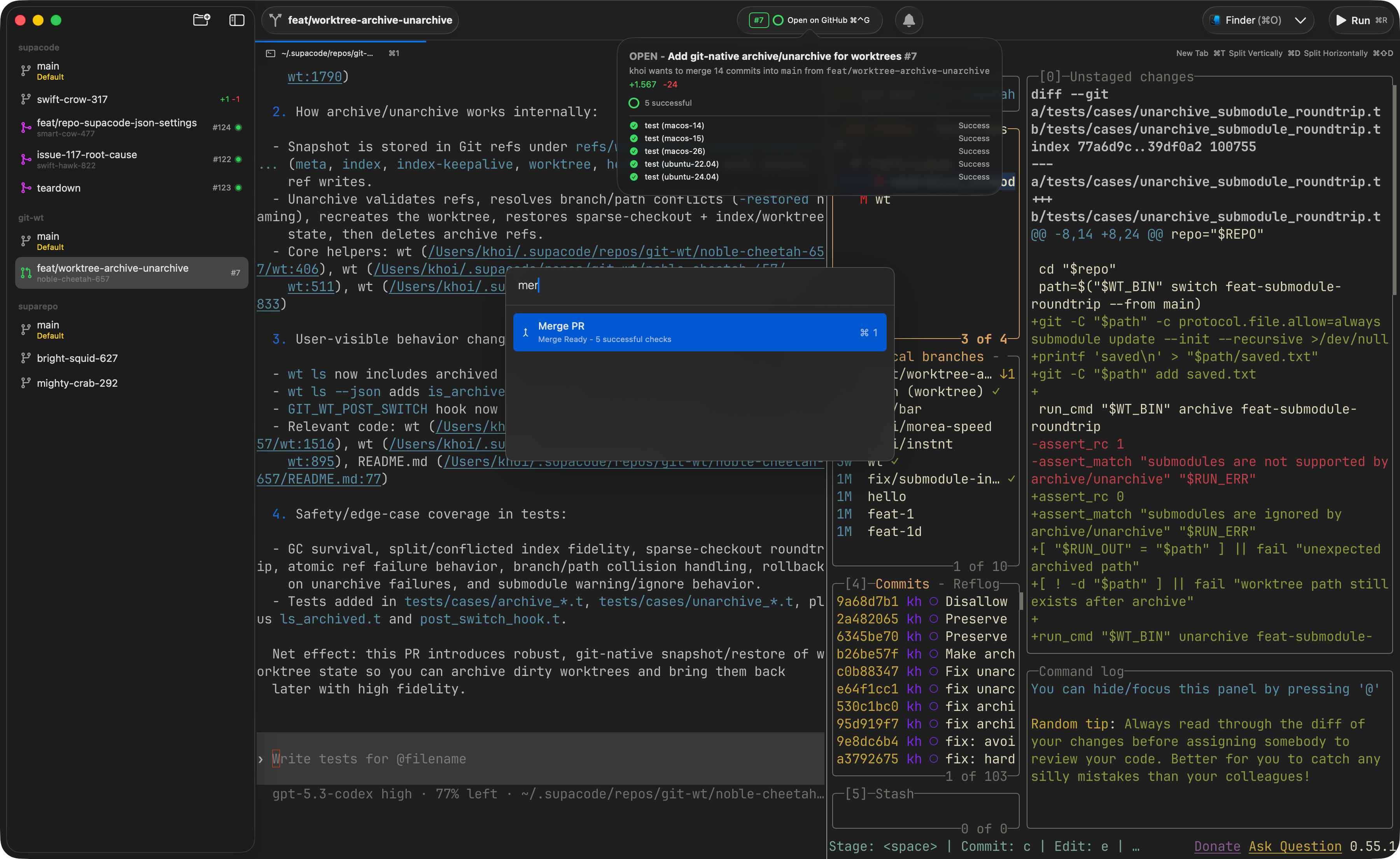
A native macOS command center for running coding agents in parallel. It’s built on libghostty with no Electron, and it gives every agent its own git worktree so dozens can run at once without colliding. Bring any CLI agent, Claude Code, Codex, OpenCode, and review GitHub PRs and CI without leaving the terminal. Free, open source, needs macOS 26.
no-mistakes

A git proxy that sits in front of your real remote. Push to no-mistakes instead of origin and it spins up a throwaway worktree, runs an AI review-test-docs-lint pipeline, auto-fixes the safe stuff, asks you about the rest, and only opens a clean PR once everything is green. Works with Claude, Codex, Copilot, and most agents. The tagline is the pitch: kill all the slop.
https://github.com/kunchenguid/no-mistakes
Hunk
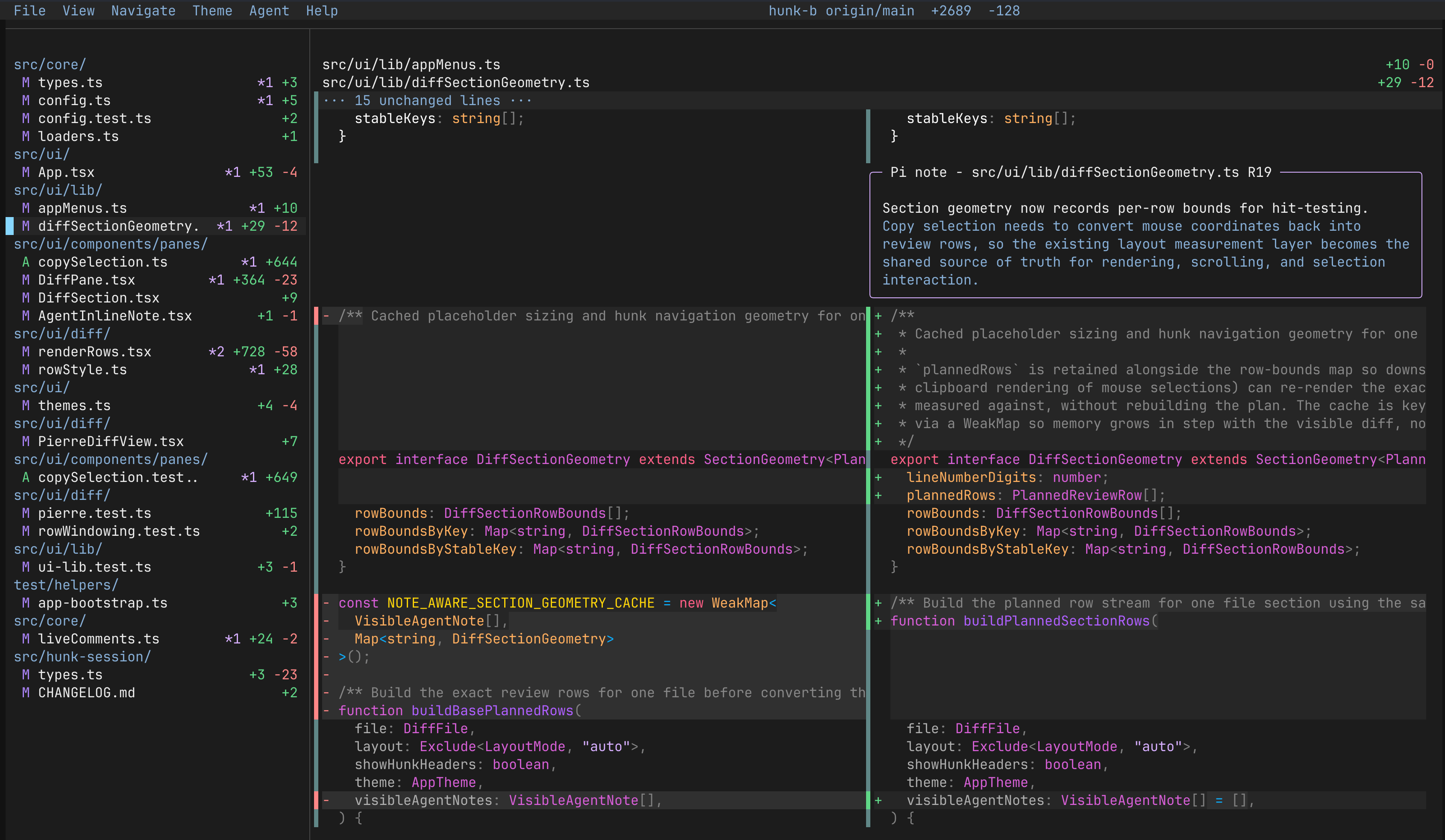
A review-first terminal diff viewer built for the age of agent-written code. Instead of a wall of plain-text diff, you get a real review UI with a file sidebar, split or stacked layouts, and inline AI annotations next to the code. It mirrors git’s own commands, so hunk diff and hunk show just work, and a watch mode reloads as your agent edits.
https://github.com/modem-dev/hunk
OpenMontage
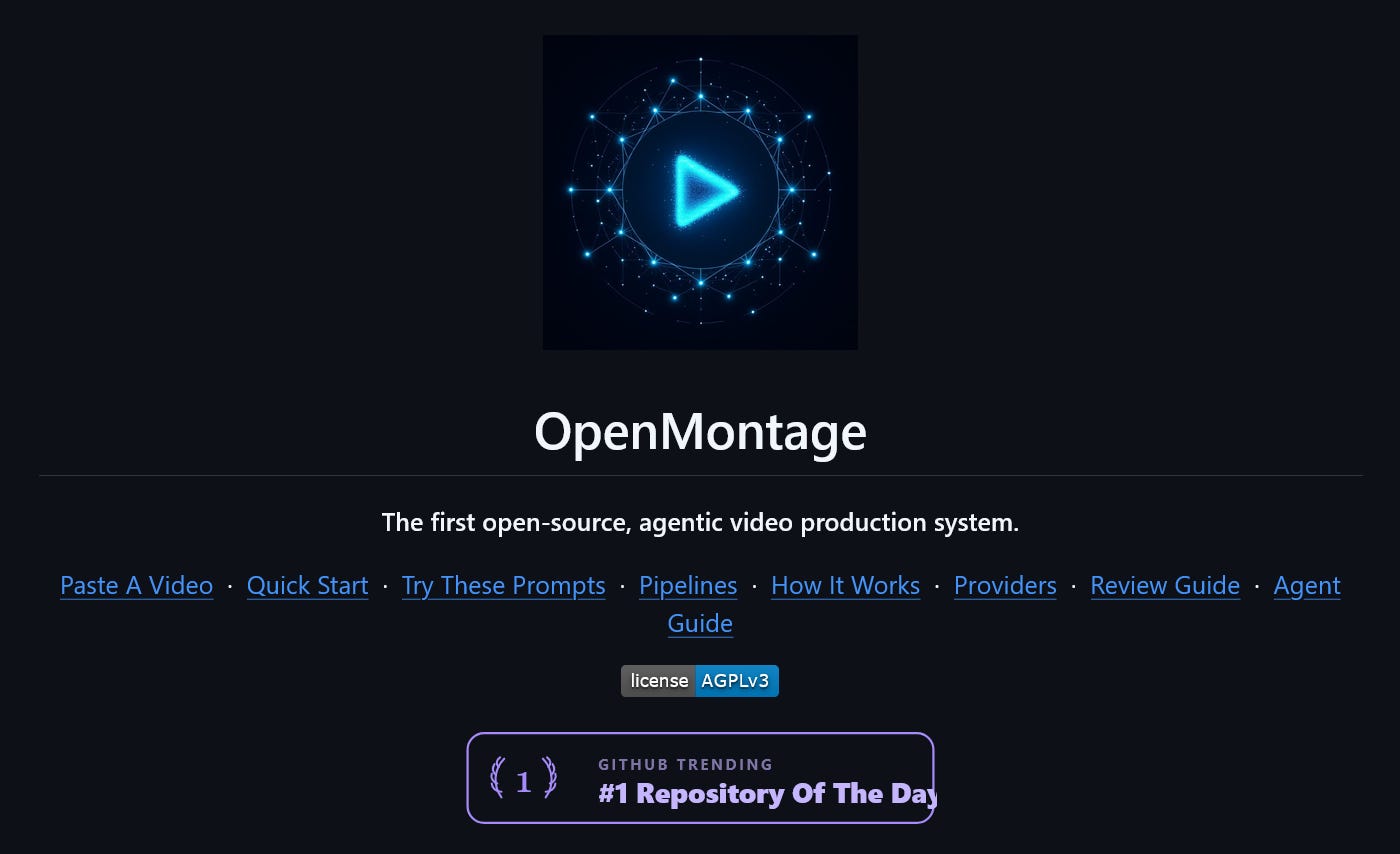
An open-source, agent-driven video production system that turns your coding assistant into a studio. Describe what you want and it researches, scripts, narrates, scores, and renders. The genuinely new part: it can cut real footage from open archives like Archive.org and Wikimedia into an actual edited timeline, not just Ken Burns over AI images. Works with Claude Code, Cursor, and Codex.
https://github.com/calesthio/OpenMontage
Agent-Reach
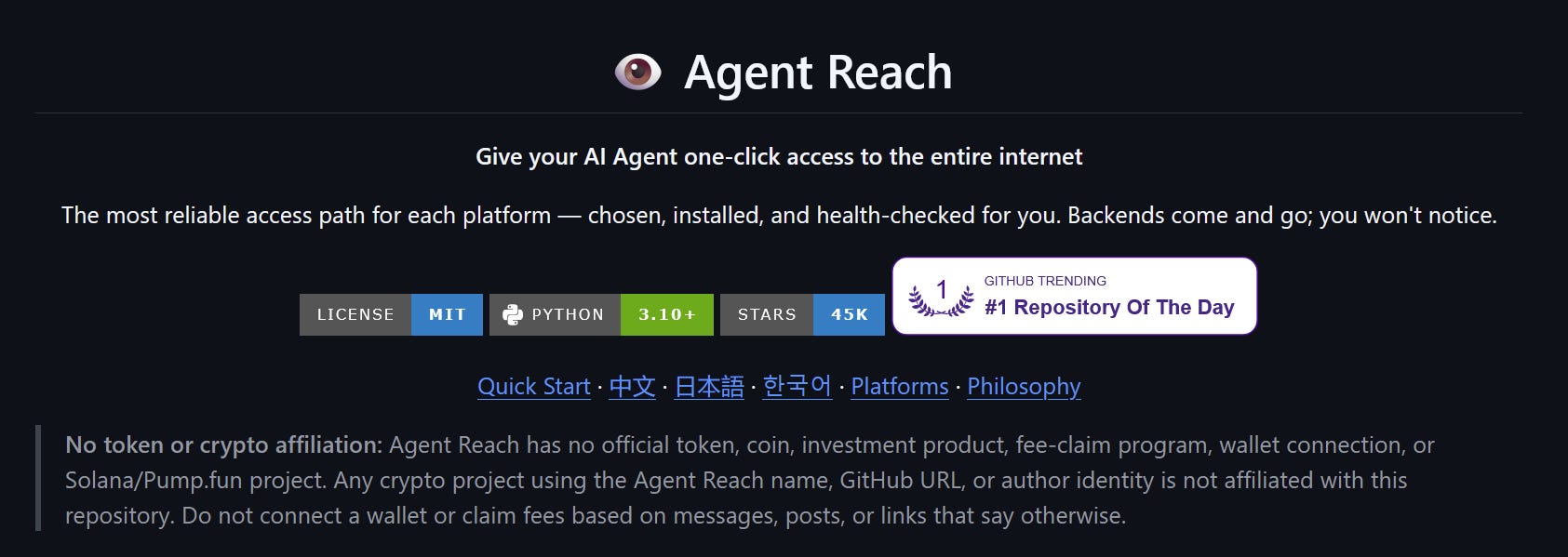
One CLI that gives your agent eyes on the open internet, Twitter, Reddit, YouTube, GitHub, LinkedIn and more, with zero API fees. It’s a capability layer rather than a wrapper: it picks the most reliable backend for each platform, installs it, health-checks it, and reroutes when one breaks. Cookies stay local. If you’ve ever fought to get an agent to read a single tweet, this is the fix.
https://github.com/Panniantong/Agent-Reach
apple/container

Apple’s own tool for running Linux containers as lightweight VMs on Apple silicon, now at a stable 1.0. It speaks standard OCI images, so you can pull and run from any registry, and it’s tuned hard for Mac hardware. Think of it as a first-party, Apple-shaped answer to the Docker Desktop question. Needs macOS 26.
https://github.com/apple/container
🔥 This Week’s Pick
Even OpenAI now needs Washington’s permission to ship
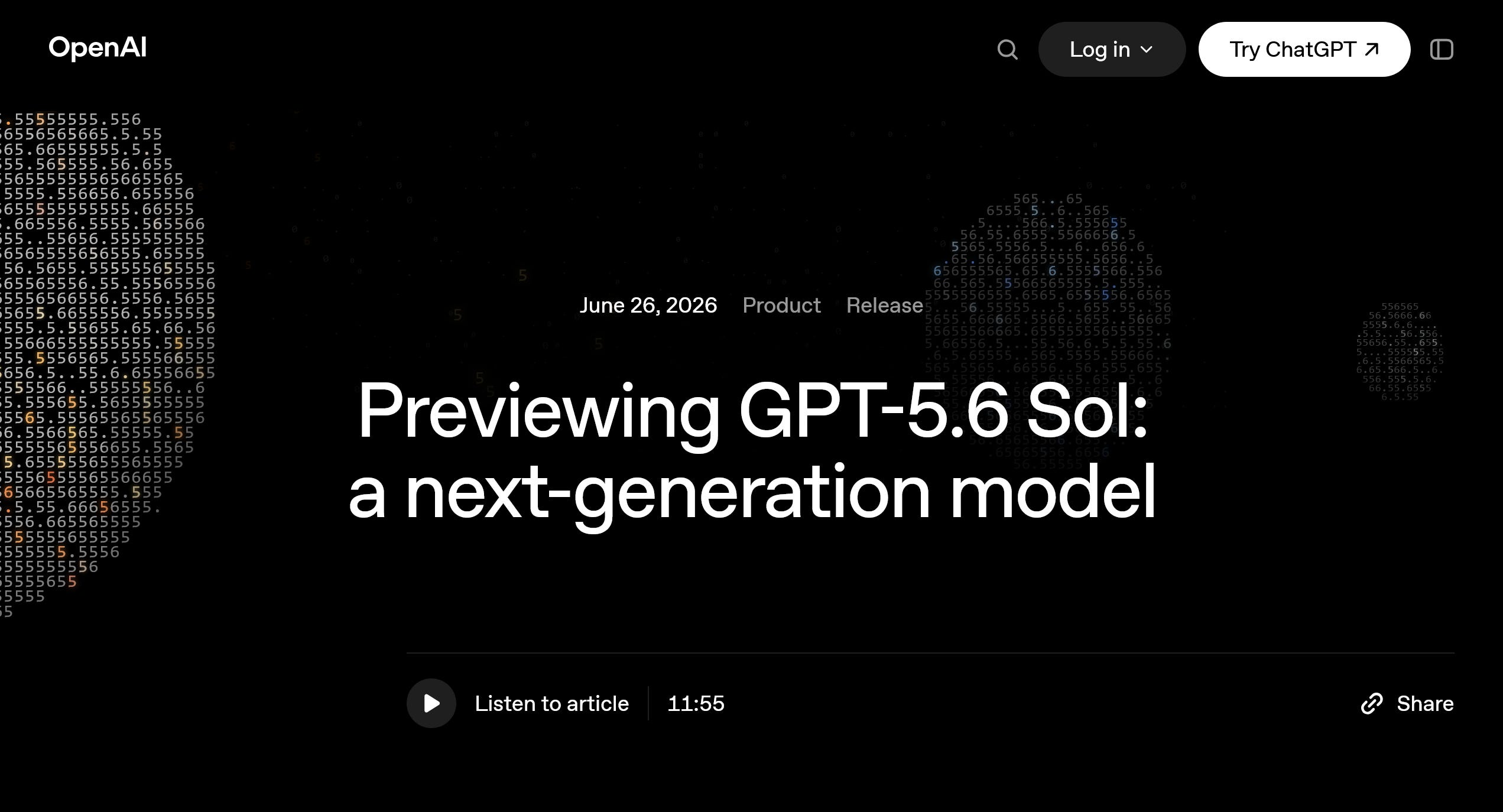
On Wednesday OpenAI previewed GPT-5.6: three models, with Sol at the top and Terra and Luna underneath. By OpenAI’s own numbers Sol is its strongest model yet, a new state of the art on agentic coding, and on one cybersecurity exploit benchmark it matches the banned Mythos preview while using about a third of the tokens.
And you can’t use it.
Read OpenAI’s own announcement. The models go to “trusted partners” first, and the list of who gets access was shared with the US government ahead of launch, at the government’s request, before any broader release.
Sit with that for a second. The same fortnight Washington banned Anthropic’s Mythos for being too good at finding vulnerabilities, OpenAI shipped a model nearly as good at the exact same thing, and pre-cleared the guest list with the administration.
OpenAI clearly hates it. The post says outright that this kind of government access process shouldn’t become the default, that it keeps the best tools from the people who need them. They did it anyway, because the alternative is a Mythos-style ban, and a gated launch still beats no launch.
Two weeks ago, a government switching off a frontier model looked like a one-time panic about one company. This week it became the template. The frontier is now capable enough that the best model and a cyberweapon are the same artifact, and the person deciding which one you’re allowed to hold no longer works at the lab.
The race to build the best model is over for now. Anthropic and OpenAI both have it. The new race is for permission to let you touch it.
https://openai.com/index/previewing-gpt-5-6-sol
🧪 This Week’s Experiments
Spin up an open model like GLM 5.2 on Modal Auto Endpoints, or locally, and price it against the gated frontier model you’re stuck waiting on.
Ask yourself what a government cyber review would do to your roadmap if the model you depend on got Mythos’d next quarter.
Export anything you care about out of Notion Mail before September 22, especially snippets and auto-label rules.