

💬 Editor’s Note
For two years the frontier belonged to whoever had the most GPUs and the most secrets. This week that started to look shaky. Moonshot shipped an open model with 2.8 trillion parameters, Mira Murati’s new lab put out its first model and made it open, and Satya Nadella, whose company bankrolls both OpenAI and Anthropic, told enterprises they are paying for closed intelligence twice. OpenAI, for its part, spent the week getting sued by Apple over the hardware it is trying to build. The distance between open and closed used to be the whole story. Right now it looks like the smallest it has ever been.
📰 Top News
Moonshot’s Kimi K3 is the first open model in the 3-trillion class
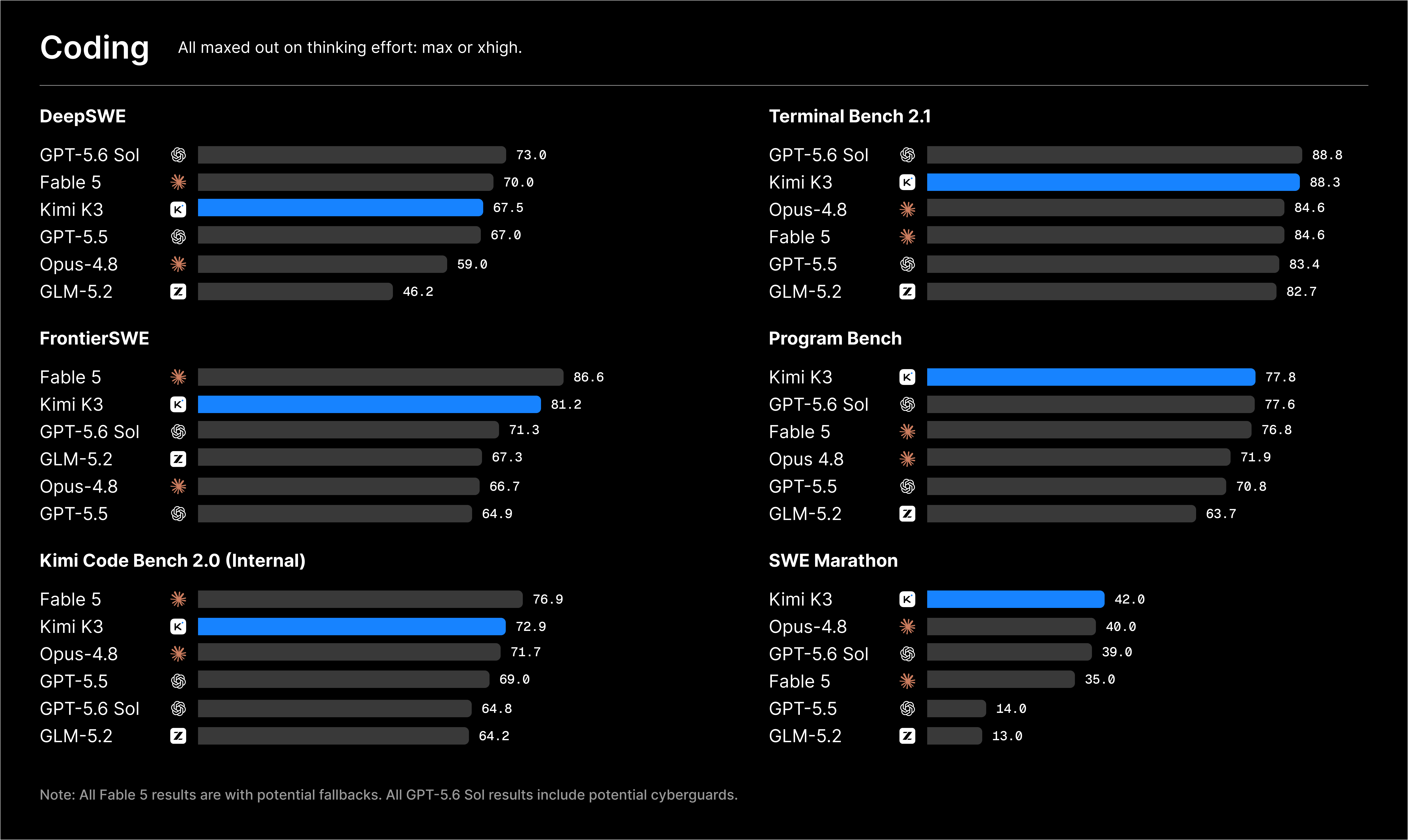
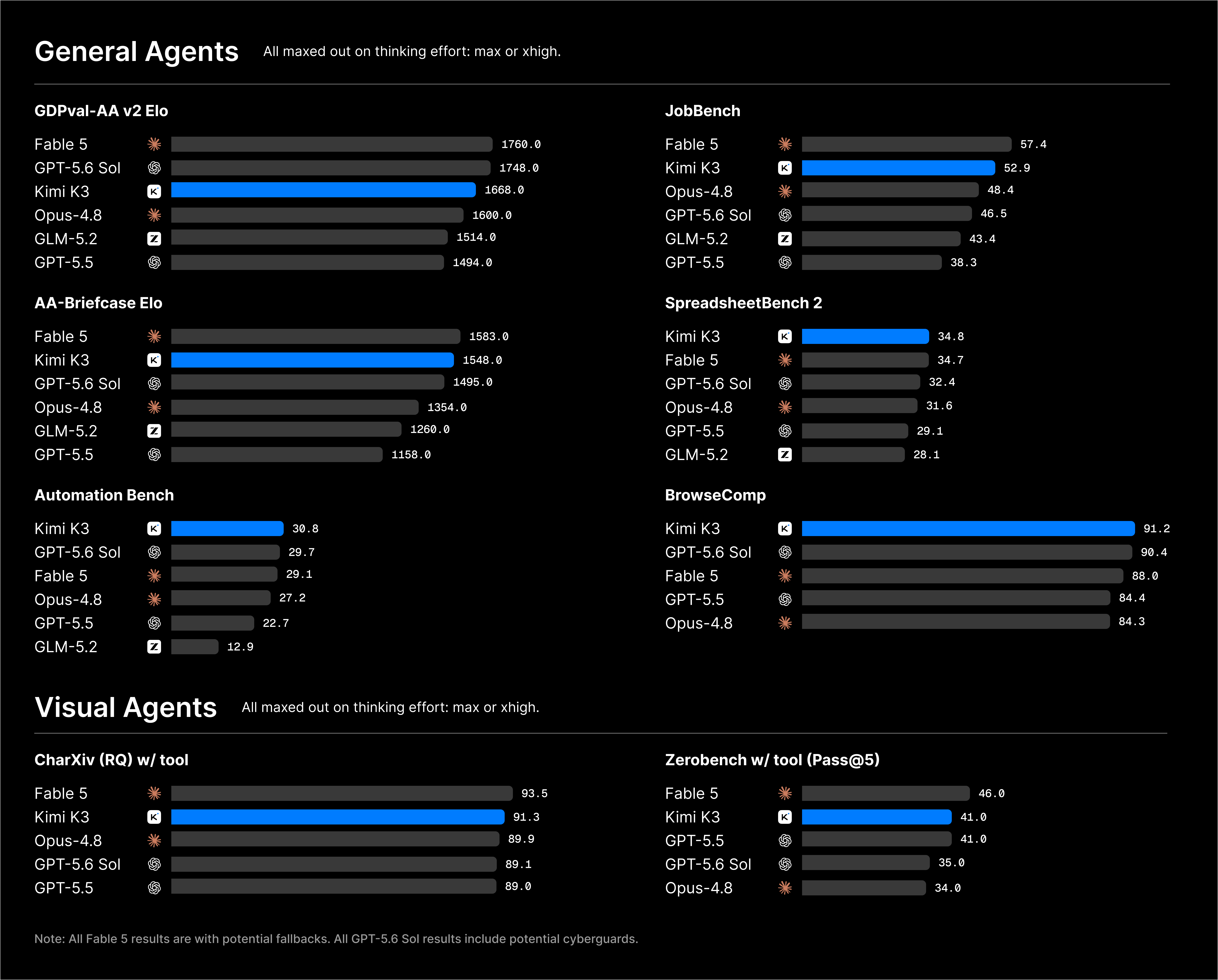
Kimi K3 packs 2.8 trillion parameters, native vision, and a 1-million-token context, and Moonshot is calling it the first open model of its size. It still trails the top closed models, Claude Fable 5 and GPT-5.6 Sol, but it beat every other model Moonshot put it against. The flex is in the receipts. In one test K3 spent 48 hours autonomously designing a chip for a nano model built on its own architecture, closing timing at 100 MHz inside 4 mm². Full weights drop July 27, and the API runs $0.30 per million tokens for cache-hit input and $15 for output.
https://www.kimi.com/blog/kimi-k3
Mira Murati’s Thinking Machines shipped its first model, open-weight
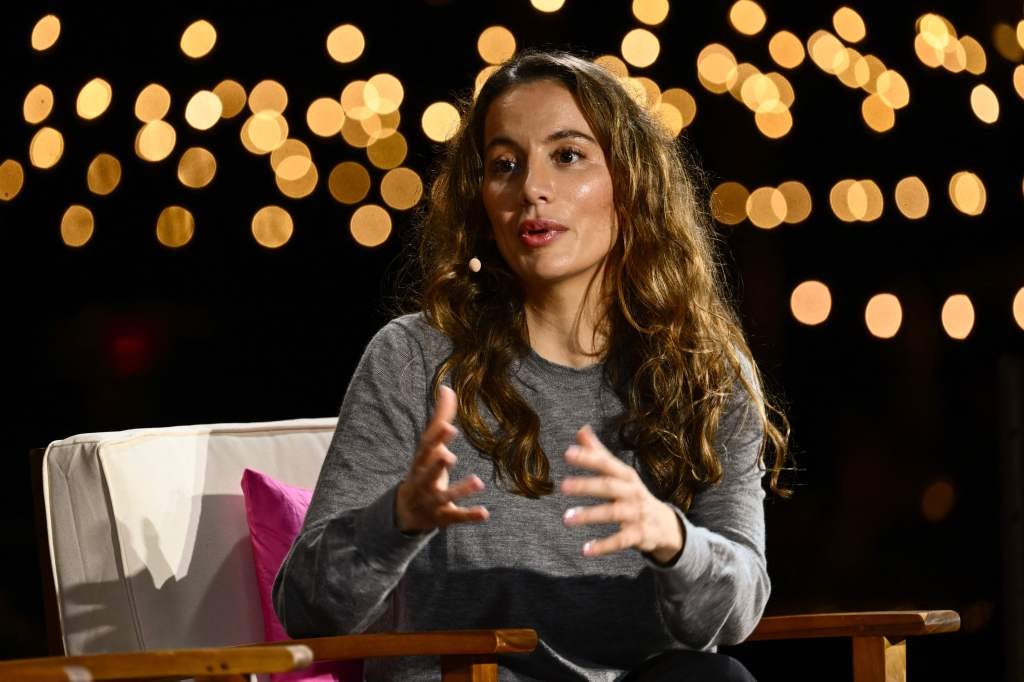
Thinking Machines Lab released Inkling, an open-weight mixture-of-experts model with 975 billion total parameters that only fires about 41 billion for any given task. It trained on 45 trillion tokens of text, image, audio, and video. The lab is refreshingly blunt that Inkling is “not the strongest overall model available today, open or closed.” The point is that it is a starting point companies fine-tune themselves through Tinker, its customization platform. In one project, researchers trained an open model on Bridgewater’s financial expertise and scored 84.7% on financial reasoning while running at roughly a fourteenth of the cost of top proprietary models. Murati says the lab did in nine months what took OpenAI five years.
Apple sued OpenAI for stealing trade secrets
Apple filed a 41-page complaint in San Jose accusing OpenAI of running a campaign to poach its staff and pull confidential information to build a consumer hardware device. Roughly 400 OpenAI employees are ex-Apple, and the suit names chief hardware officer Tang Yew Tan, who allegedly asked candidates to bring physical parts like batteries and circuit boards to interviews for show-and-tell. Apple calls it the tip of the iceberg. The timing stings, because Bloomberg reported the same week that OpenAI’s first device is a screenless, self-moving smart speaker pitched internally as a “humanlike AI companion that lives in the home,” built with help from former Apple engineers. OpenAI says it has “no interest in other companies’ trade secrets.”
https://www.channelnewsasia.com/world/apple-sues-openai-trade-secrets-6247591
Even Microsoft is warning companies off closed models
In a Sunday blog post, Satya Nadella argued that enterprises using proprietary AI pay twice, once in tokens and again in the proprietary knowledge they reveal to make the model useful. “Every correction is distilled into institutional know-how,” he wrote, the kind of knowledge a competitor could never buy. His fix reads like a cloud CEO’s wish list: keep ownership of your data, build your own learning environments, and add an orchestration layer so you can swap models instead of getting locked in. Open source is the obvious subtext, and the numbers back it, with open models making up 29% of traffic through Vercel’s gateway last month.
https://techcrunch.com/2026/07/13/satya-nadella-has-issued-a-shocking-warning-to-companies-using-ai
🕵️ Undercovered
A 27B model now fits on a phone
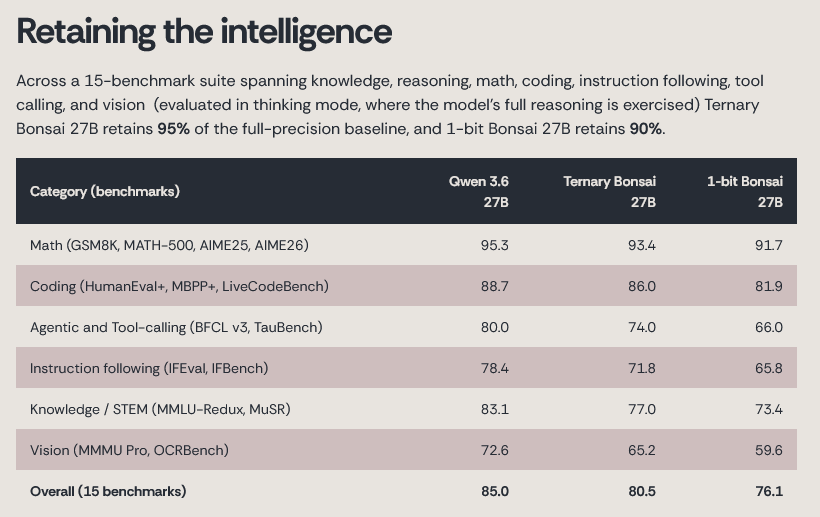
PrismML’s Bonsai 27B, based on Qwen3.6 27B, is the first model of its class small enough for a handset. The 1-bit build is 3.9 GB and clears the roughly 6 GB an iPhone 17 Pro actually hands an app, while the 5.9 GB ternary build runs on a laptop with full reasoning, tool use, and vision. The 1-bit version keeps 90% of the full-precision score, the ternary keeps 95%, and it hits 163 tokens per second on a 5090. This is the pitch local-first people have made for years: once a capable agent lives on the device, a hundred-step loop costs nothing and your data never leaves.
https://prismml.com/news/bonsai-27b
Perplexity’s new benchmark shows research agents still can’t go wide and deep

WANDR is an open benchmark of 500 realistic data-collection tasks, the kind where you need every qualifying company, each backed by evidence. The strongest system, Perplexity’s own Search as Code, managed just 0.363 soft F1 and 0.133 hard F1. Anthropic came second, and everything else topped out around 0.121. The failure mode is the useful part. Finding a usable page is easy, but 57% to 87% of submitted excerpts did not actually support the claim they were attached to. Wide-and-deep research is nowhere near solved, worth remembering next time a demo makes it look effortless.
Claude’s values shift with the language you speak to it
Anthropic compressed the 3,000-plus values it had catalogued in Claude down to four axes, then measured how they move. Claude leans most toward warmth in Hindi and Arabic and most toward rigor in English and Russian. So two people asking for feedback on the same business plan, one in Hindi and one in Russian, can come away with different impressions of its quality, from language alone. Models differ too: Sonnet 4.6 runs warm and deferential, Opus 4.7 more cautious and candid.
https://www.anthropic.com/research/claude-values-models-languages
Anthropic’s new ad is creeping people out
Anthropic’s “There’s hope in hard questions” spot opens on a burning house, then cuts through facial-recognition crowds, a person sleeping on the street, and rows of tombstones while voices ask “Can AI be trusted?” The ethical-foil positioning is very Anthropic, but the graveyard shot landed badly, and even Sam Altman piled on: “i thought this was satire, kept looking for the handle to be spelled c1audeai.” Proof that vibes stay hard to ship, even with a great model.
https://techcrunch.com/2026/07/14/anthropics-newest-ad-is-creeping-people-out
🗄️ The Vault
pgrust
A rewrite of Postgres in Rust that boots straight from an existing Postgres 18.3 data directory and matches expected output across more than 46,000 regression queries. The maintainer says an unreleased next version passes 100% of the suite, switches to thread-per-connection, and runs 50% faster on transactions and roughly 300x faster on analytics. AGPL-3.0, with a WebAssembly demo you can poke at in the browser.
https://github.com/malisper/pgrust
Lore

Epic Games open-sourced its version control system for projects that mix code with huge binary assets, which is to say games. Lore is content-addressed on a Merkle tree, with an immutable revision chain, chunked storage for big files, and sparse workspaces that hydrate on demand. It is already the built-in VCS for Unreal Editor for Fortnite. MIT licensed, with SDKs for JavaScript, Python, C#, and Go.
https://github.com/epicgames/lore
OmniRoute
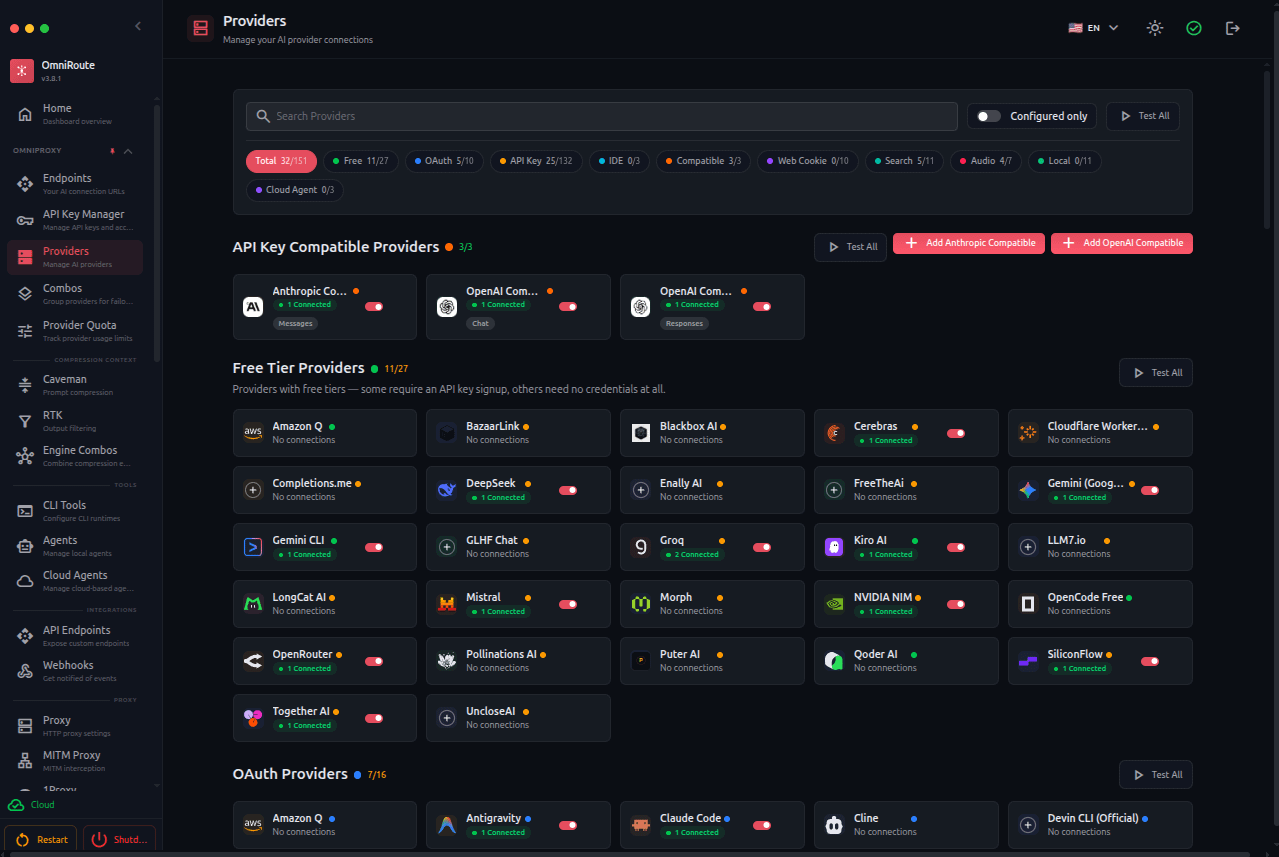
A free AI gateway that puts 264 providers, more than 90 of them free, behind a single endpoint, so Claude Code, Codex, Cursor, and Cline auto-fall-back the moment a quota runs dry. It ships 18 routing strategies and stacked token compression that trims 15% to 95% of eligible tokens. Extremely on-theme for a week about never being locked into one model. MIT licensed.
https://github.com/diegosouzapw/OmniRoute
Outpost
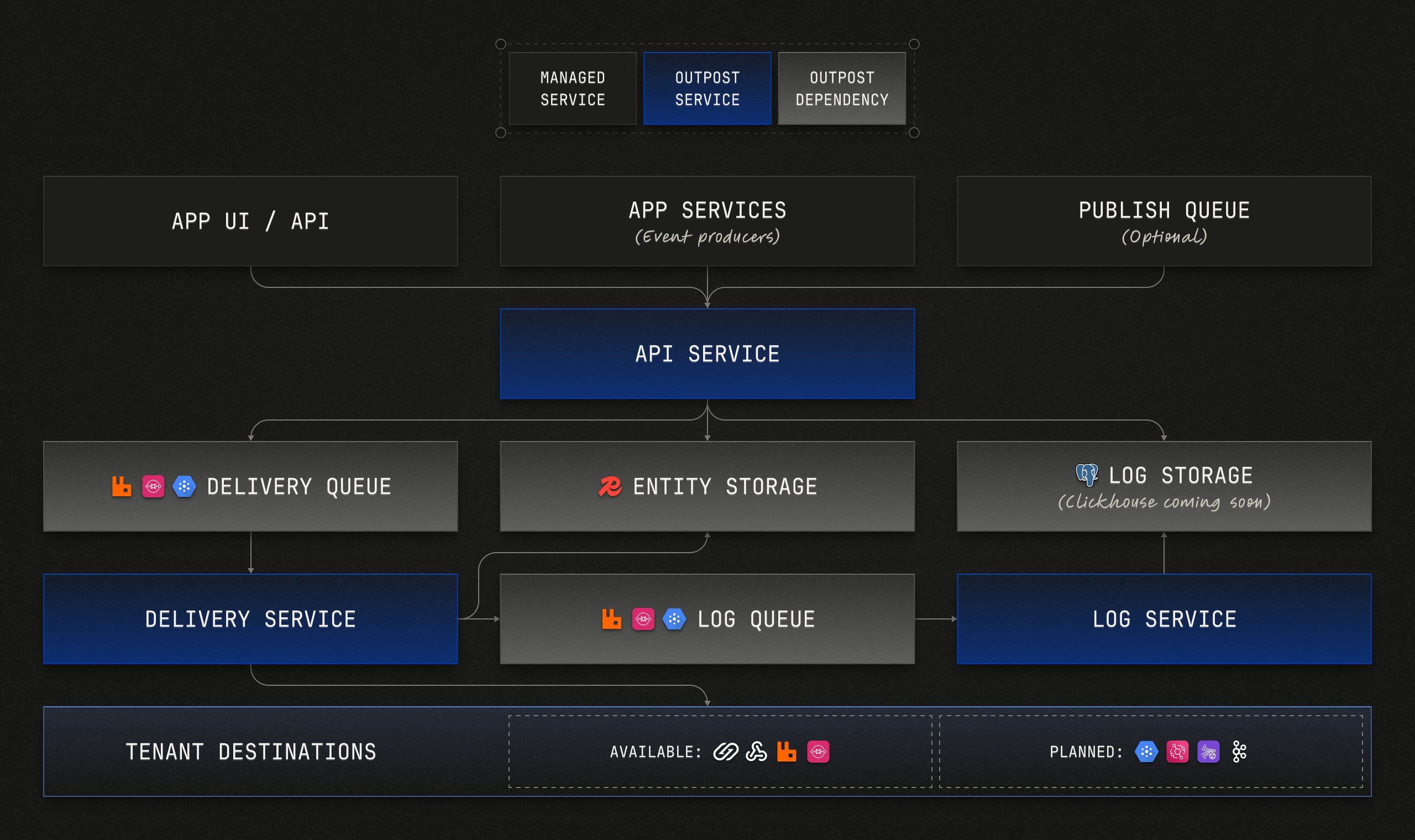
Hookdeck open-sourced its outbound-webhooks infrastructure. Outpost gives your platform multi-tenant event delivery with retries, a customer portal, fanout, and destinations well beyond HTTP, including SQS, EventBridge, GCP Pub/Sub, RabbitMQ, and Kafka. It stays backward compatible with your existing webhook format. Written in Go, Apache-2.0, self-host it or run the managed version.
https://github.com/hookdeck/outpost
LM Studio Bionic
LM Studio’s biggest release yet, a standalone agent built around open models. It handles coding and document work, runs models locally or in a zero-retention cloud, and ships local voice transcription powered by Mistral’s Voxtral. It works with open models like GLM 5.2 and Kimi K2.7 Code. If you want a capable agent that stays on your machine, start here.
https://lmstudio.ai/blog/introducing-lm-studio-bionic
Will Codex reset?
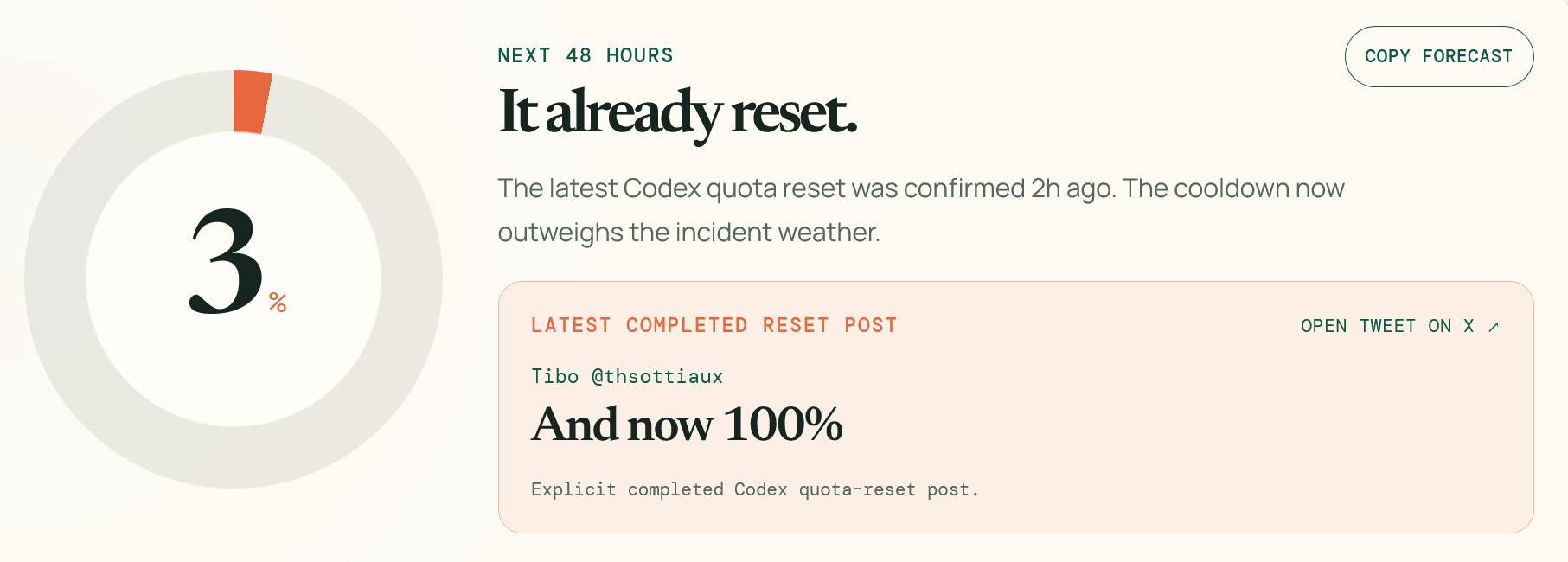
An unofficial quota meteorology site that forecasts the odds of a Codex quota reset in the next 48 hours by watching OpenAI’s status page, staff vagueposting, and launch confetti. It is entirely a joke. You will still check it before your next big session.
https://www.willcodexquotareset.com
🔥 This Week’s Pick
Open models had their best week in a long time
If you internalize one thing from this issue, make it this: the open frontier moved. Kimi K3 put a 3-trillion-class model in the open. Thinking Machines, founded by OpenAI’s former CTO, shipped its first model and made it open-weight. Microsoft’s own CEO told enterprises that feeding closed models is a quiet tax on their own knowledge. No single one of these settles the open-versus-closed debate. Landing in the same week, they make the closed labs’ moat look less like a canyon and more like a ditch. If you are building local-first or hot-swappable, this is the week the market started saying what you already believed.
🧪 This Week’s Experiments
Pull an open model into LM Studio Bionic and see how close it gets to your daily closed model on one real task.
Point a coding agent at OmniRoute and watch it fall back to a free provider the moment your quota dies.
Write down the last five corrections you gave a closed model this week, then ask whether you would hand that list to a competitor.
Boot pgrust from a copy of a real Postgres data directory and throw your ugliest query at it.
Open Will Codex reset before your next long session, purely for morale.